-
Alaska Range
Photograph by Bill Hatcher
A vast land of overwhelming beauty, abundant resources, and few people, America's Last Frontier stretches across some 660,000 square miles (1.7 million square kilometers) of rugged land. More than a third of mineral-rich Alaska is forested; a quarter is set aside as parks, refuges, and wilderness. The Alaska Range, pictured above, stretches from Canada's Yukon border in the east to the base of the Aleutian Range in the west.
-
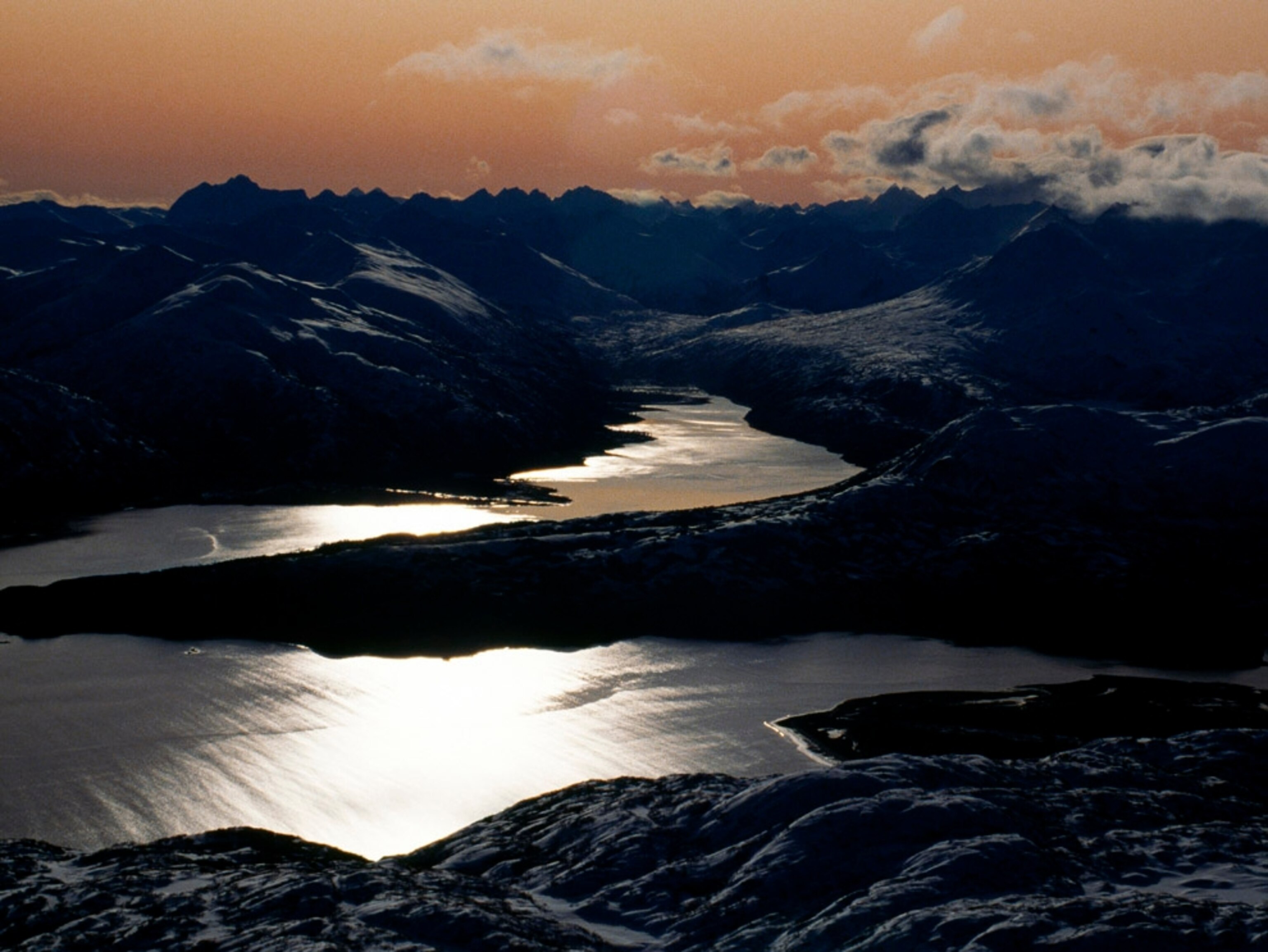
Ugak Bay
Photograph by George F. Mobley
Ugak Bay sleeps beneath a winter sun. Many of these long inlets deeply cleave the coast: No site on land is more than 15 miles [24 kilometers] from the sea.
—From "Kodiak: Alaska's Island Refuge," November 1993, National Geographic magazine
-
Grayling Lake Trail
Photograph by Michael Melford
A water lily-carpeted pond edges Grayling Lake Trail, north of Seward, Alaska. One of the lakes along the trail abounds in grayling, surface feeders with long dorsal fins.
—From "Taking on the Kenai," May/June 1998, National Geographic magazine
-
Ayakulik River
Photograph by George F. Mobley
Fabulous fishing creates tent towns on the Ayakulik. Six salmon species—chinook, sockeye, pink, coho, steelhead, and chum—spawn in it.
—From "Kodiak: Alaska's Island Refuge," November 1993, National Geographic magazine
-
Old Harbor, Kodiak
Photograph by George F. Mobley
Snug outpost, Old Harbor—population 298—nestles beneath sheltering peaks. On Kodiak [Island] nearly everyone fishes, including the island's huge brown bears, which roam a renowned wildlife refuge.
—From "Kodiak: Alaska's Island Refuge," November 1993, National Geographic magazine
-
Breaching Whale
Photograph by Flip Nicklin
Whale-watchers flock to such spectacles [as breaching] during the spring-to-fall feeding season off Alaska, while scientists debate whether groups of whales hunt cooperatively.
—From "Listening to Humpbacks," July 1999, National Geographic magazine
-
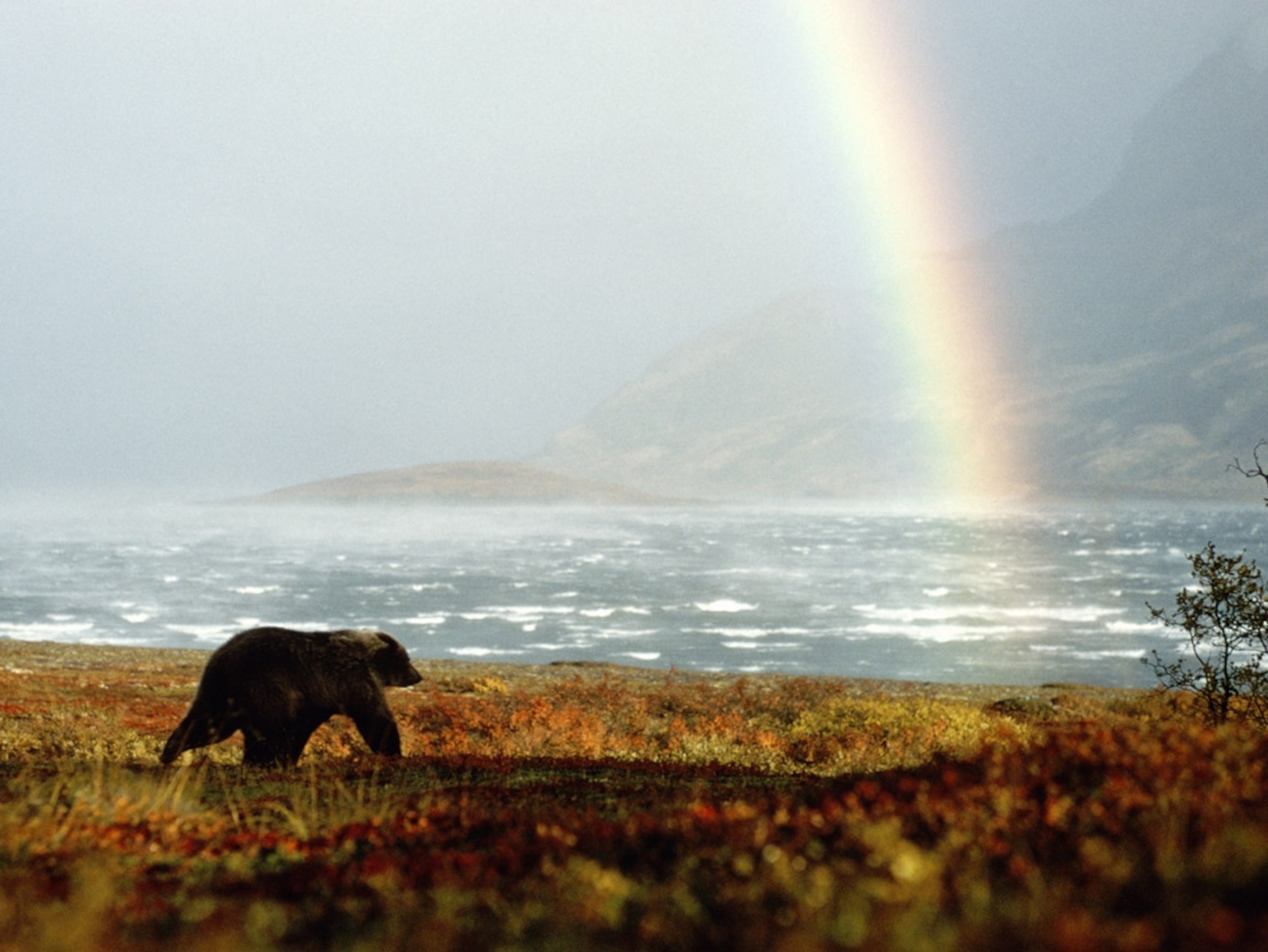
Alaskan Brown Bear
Photograph by George F. Mobley
Coastal [brown bears] emerge from their dens in March, April, or May, often with snow still on the ground.... By August the bears are eating as much as 90 pounds [41 kilograms] of food a day to prepare for their winter sleep. Cubs, usually twins, are born in the den in January or February; they stay with their mother for two or three years. She teaches them to fish, forage, hunt, and defend themselves.
—Text from the National Geographic book Alaska's Wildlife Treasures, 1994, and photograph from the National Geographic book Wild Animals of North America, 1979
-
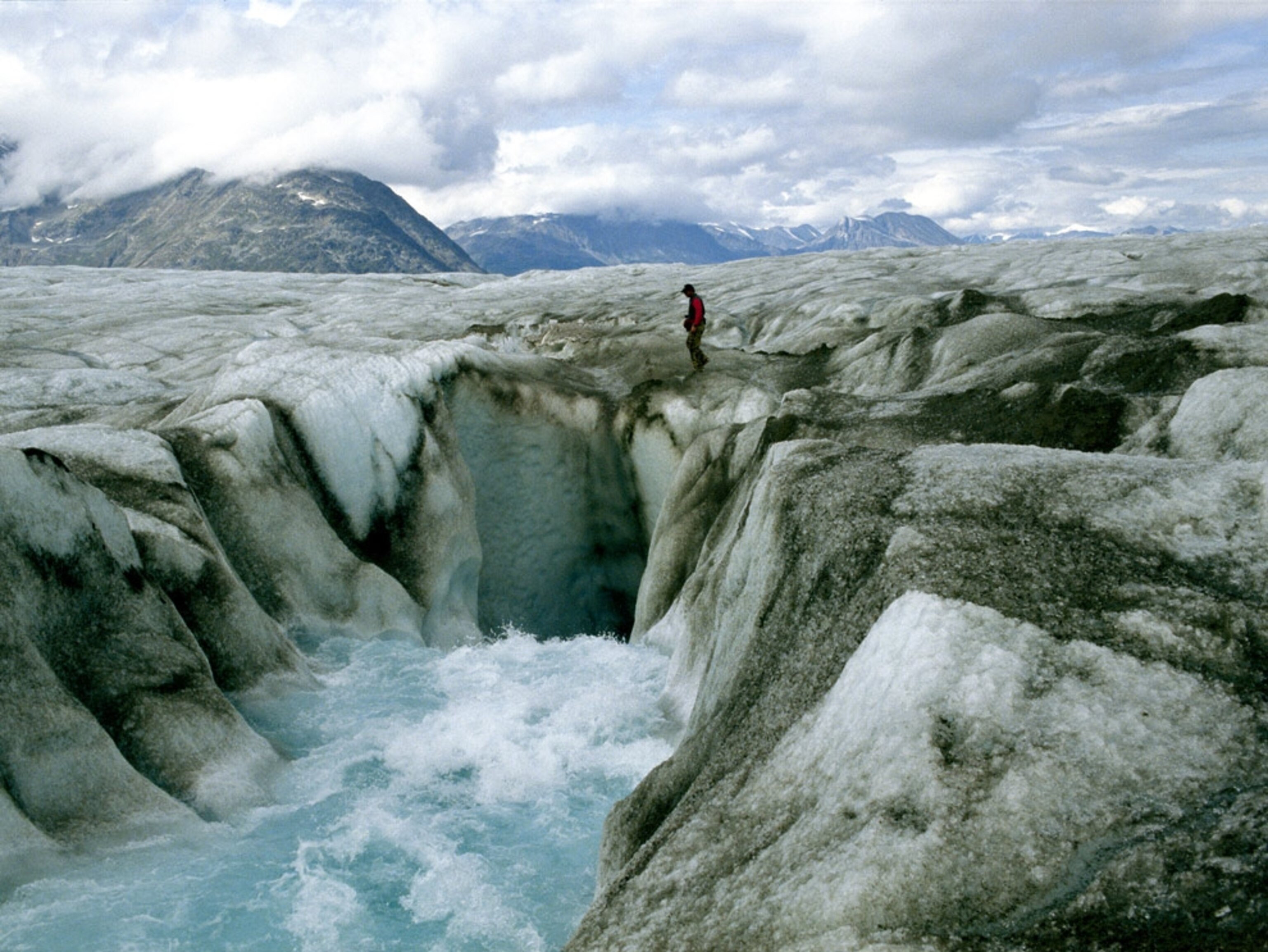
Tana Glacier
Photograph by George F. Mobley
As summer sun melts ice atop the [Tana Glacier], rivulets disappear into surface holes. In time trickle becomes torrent, and a hole widens to a moulin, a gaping cave that plunges into the bowels of the ice—likely more than a thousand feet [305 meters] in this case.
—From "Alaska's Sky-High Wilderness," May 1994, National Geographic magazine
-
Shishmaref Inlet
Photograph by George F. Mobley
The livid light of late October illuminates Shishmaref Inlet, located just 21 miles (34 kilometers) south of the Arctic Circle in Alaska. The Inuit living in the village of Shishmaref may soon be the first refugees of global warming. Rising sea levels and the melting of permafrost are causing their island to quickly erode into the Chukchi Sea.
—Text adapted from and photograph shot on assignment for, but not published in, the National Geographic book Alaska, 1969
-
Icy Bay
Photograph by George F. Mobley
Nearly midnight on Icy Bay, and late June twilight still mixes with moonglow. Glaciers that covered this spot 90 years ago continue to carve new features on the many faces of Wrangell-St. Elias [National Park].
—From "Wrangell-St. Elias National Park: Alaska's Sky-High Wilderness," May 1994, National Geographic magazine
-
Aurora Borealis
Photograph by Bruce Dale
A herd of stars makes tracks across Alaska's northern lights in a time exposure taken when the temperature reached minus 58 degrees Fahrenheit (minus 50 degrees Celsius).
—From "Alaska: Rising Northern Star," June 1975, National Geographic magazine
-
Tongass National Park
Photograph by Michael Melford
When the tide goes out, a starfish is exposed to the elements in Tongass National Forest. A popular spot for tourists along the Inside Passage, the Tongass is the largest remaining temperate forest in the world—even as the logging industry lobbies for greater access to it.
—From "A Wilder Passage," May/June 1999, National Geographic Traveler magazine
-
Kodiak Brown Bear
Photograph by George F. Mobley
The Kodiak brown bear—among the world's largest bears—is a subspecies unique to the Kodiak archipelago. To limit access to these popular animals and to offer a lifetime thrill, the U.S. Fish and Wildlife Service runs a viewing program; 250 people from around the world applied for 90 slots in 1992. Vic Barnes (at left), who started the program, radio collars a bear with his 11-year partner, state biologist Roger Smith.
—From "Kodiak: Alaska's Island Refuge," November 1993, National Geographic magazine
-
Prince William Sound
Photograph by Karen Kasmauski
A sea otter shares the waters of Alaska's foggy Prince William Sound with a spill-containment vessel nearly a decade after the Exxon Valdez ran aground and fouled these pristine waters with 11 million gallons (40 million liters) of crude oil. Intense clean-up efforts after the disaster lasted more than four years.
Now, evidence of the spill is hard to detect. But some beaches still have Valdez oil buried just below the surface. And scientists say some animal species, including sea otters, harbor seals, harlequin ducks, and herring, have yet to recover from the spill's negative effects.
—From "In the Wake of the Spill: Ten Years After Exxon Valdez," March 1999, National Geographic magazine
-
Killer Whales, Glacier Bay
Photograph by Steve Raymer
Killer whales break the water's surface of Glacier Bay in Alaska. Also known as orcas, these marine mammals often use echolocation to find their prey, which usually consists of fish and squid.
—Photograph shot on assignment for, but not published in, "Risk and Reward on Alaska's Violent Gulf," February 1979, National Geographic magazine
Shop National Geographic
Top Picks for Travel
- Enter Now! Traveler Photo Contest
- NEW! Best of the World Weekly
- Call for Nominations: Travelers of the Year
- How to Become a Nat Geo Photographer
- Top 10 Islands
- Don George's #TripLit Pick for June
- Download City Guides App
- Photos: Galicia, Spain
- Photo Gallery: World's Best Ecolodges
- Tips for Traveling Couples
Advertisement
Our Trips
2013 Traveler Photo Contest
-
Share Your Best Travel Photos
Enter to be featured in our weekly galleries and win a grand prize trip to the Galápagos.