-
Photograph by Leong Ka Tai
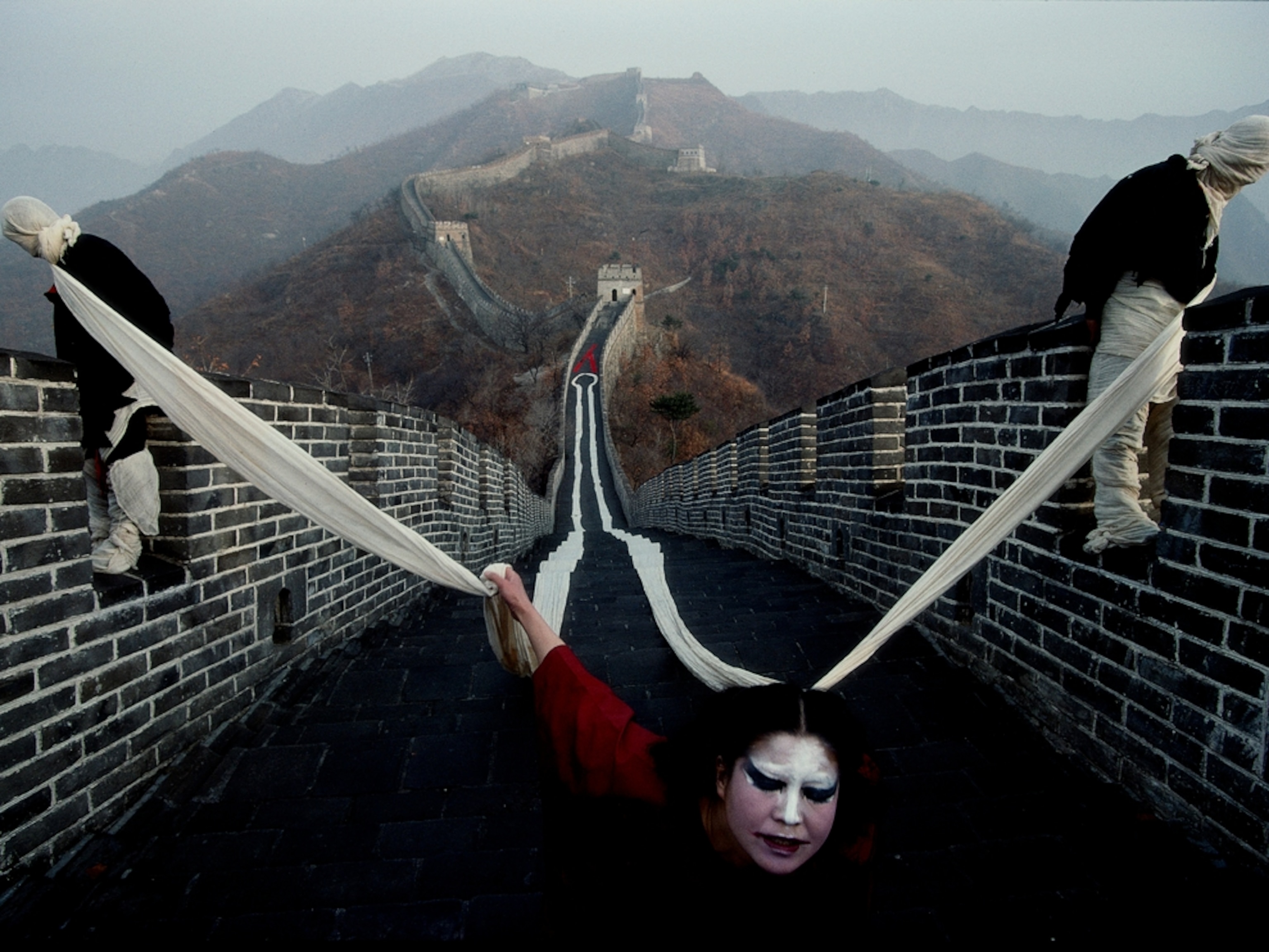
The 4,163-mile-long (6,700-kilometer) Great Wall of China maintains its appeal despite an almost constant onslaught of tourists. Many of them are armed with cameras, so you can forget about shooting the ancient spectacle from a fresh angle—unless you're as clever as photographer Leong Ka Tai, a Hong Kong native. "One evening I met an avant-garde performance troupe in Beijing and asked them to come with me to the wall," Leong recalls. Just before dawn, the group drove 45 minutes north of the city to Mutianyu, a well-preserved section of the vast landmark, visible from space. The artists strung out white cloth leading to another length of cloth that formed the Chinese character for "human being" in red. "In this performance the artists are saying that the people of the world are bound to one another," Leong explains. "The girl in front is trying to pull the others together, to get them to cooperate."
See more photos taken by photojournalists with a strong connection to China in "My China," in the January/February 2008 issue of National Geographic Traveler.
-
Photograph by Rong Yong
Boats ply a watery thoroughfare in Xitang, a small town in the coastal province of Zhejiang. Known as the "land of rice and fish" because of its many paddies and waterways, Zhejiang lies within the fertile delta of the Yangtze River (Chang Tiang). Its water towns are noted for their riverine streets, lined by venerable dwellings and crisscrossed by old arched bridges. "There's a dense vitality in the lower reaches of the Yangtze River," says Shanghai-based photographer Rong Yong. "At this moment, the lanterns along the sides of the river seemed to turn the long corridor of calm, misty water and old buildings into a red flue. The tone in this scene is warm, and the color is gentle. Xitang is such a peaceful place at night."
See more photos taken by photojournalists with a strong connection to China in "My China," in the January/February 2008 issue of National Geographic Traveler.
-
Photograph by Adam Wong
On a sunny October day, a Mongolian herder leads camels over a sand dune in the Badain Jaran Desert, one of the vast, mostly empty landscapes that make up the southernmost section of the Gobi, Asia's largest desert. Photographer Adam Wong positioned himself downslope from the animals to emphasize "the beautiful motion they make as they move across the sand." Wong, born in South China's Guangdong Province, was a painter before becoming a photographer and still brings an artist's sensibility to his compositions. "In recent years, even some of the most remote places in China have become commercialized," he says. As a result, nowadays camels are often used to haul city folk—mostly Chinese, plus a relatively few Westerners—on adventure travel outings. "Many herders are making their living entertaining tourists," Wong says.
See more photos taken by photojournalists with a strong connection to China in "My China," in the January/February 2008 issue of National Geographic Traveler.
-
Photograph by Ian Teh
The future rises before the eyes of a group of construction workers helping to build the new "Water Cube," the main swimming venue for the 2008 Summer Olympics. Designed by Australian and Chinese architects, the Water Cube features a facade that appears to be made of large water bubbles. In reality, they're sections of plastic film pumped full of air. London-based photographer Ian Teh was drawn to the night scene because of "the slightly surreal quality of the image—its curious mix of lighting, wacky modern architecture, and workers who look like they could be having a picnic. Many of these workers come from faraway provinces and live in the countryside. They have never seen this kind of avant-garde architecture, and it is quite likely they will never afford the price of a ticket to see the Olympic events in these spaces."
See more photos taken by photojournalists with a strong connection to China in "My China," in the January/February 2008 issue of National Geographic Traveler.
-
Photograph by Keren Su
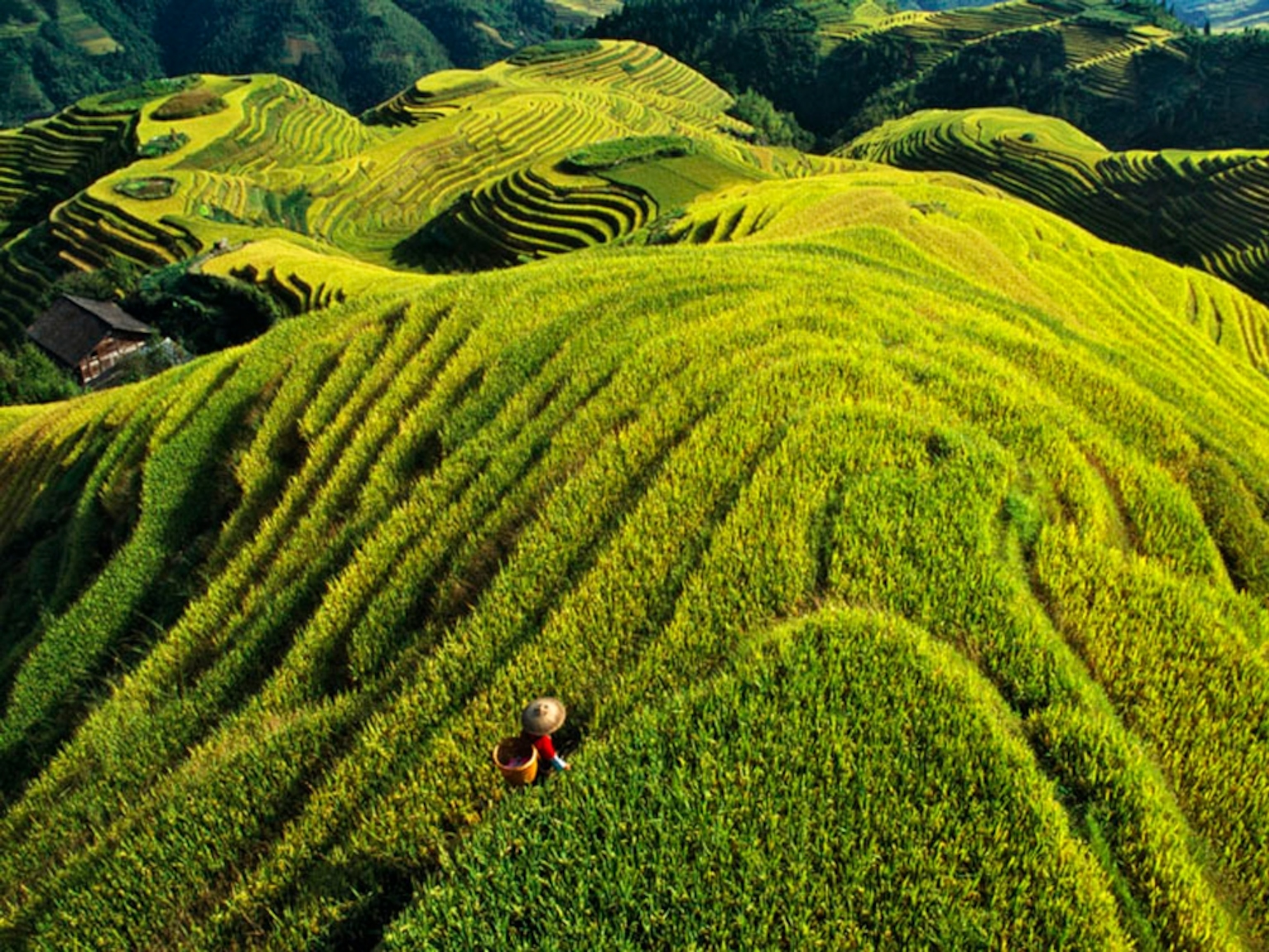
I took this photograph in the valley of Longji, or Dragon Spine," says photographer Keren Su. "The area has these breathtakingly beautiful hills sculpted into tightly packed rice fields that wrap around the hillsides. Because China has a huge population and scarce arable land, we have had to cultivate whatever arable land we can—and endured great hardship in doing so. The most remarkable aspect of this scene is that it captures the spectacular scale of these terraces. The rice terraces in Bali, Indonesia, may be world famous, but to me there is no comparison. The valley here is deep, dropping 3,000 feet (914 meters), and these terraces are carved on steep slopes from top to bottom. The plantings are tended by the Zhuang people, who created this marvelous landscape."
See more photos taken by photojournalists with a strong connection to China in "My China," in the January/February 2008 issue of National Geographic Traveler.
-
Photograph by Bruce Yuanyue Bi
This is beauty in a twinkling," says Shanghai-born Bruce Yuanyue Bi. "I couldn't help pressing the shutter at this moment." The scene shows a Uyghur girl weaving silk fabric in a traditional workshop in northwestern China. "The silk dress the girl wears and the silk cloth she's making share similar patterns and colors," says Bi. "The juxtaposition of the girl's serious expression and the delicate silk caught my attention. I like the mild lights and the harmony of the colors in this photograph. These help unite the composition." The city of Hotan is famous for its silk, in addition to its jade and fine carpets. Together, these items are called the "Three Treasures of Hotan."
See more photos taken by photojournalists with a strong connection to China in "My China," in the January/February 2008 issue of National Geographic Traveler.
-
Photograph by Michael Yamashita
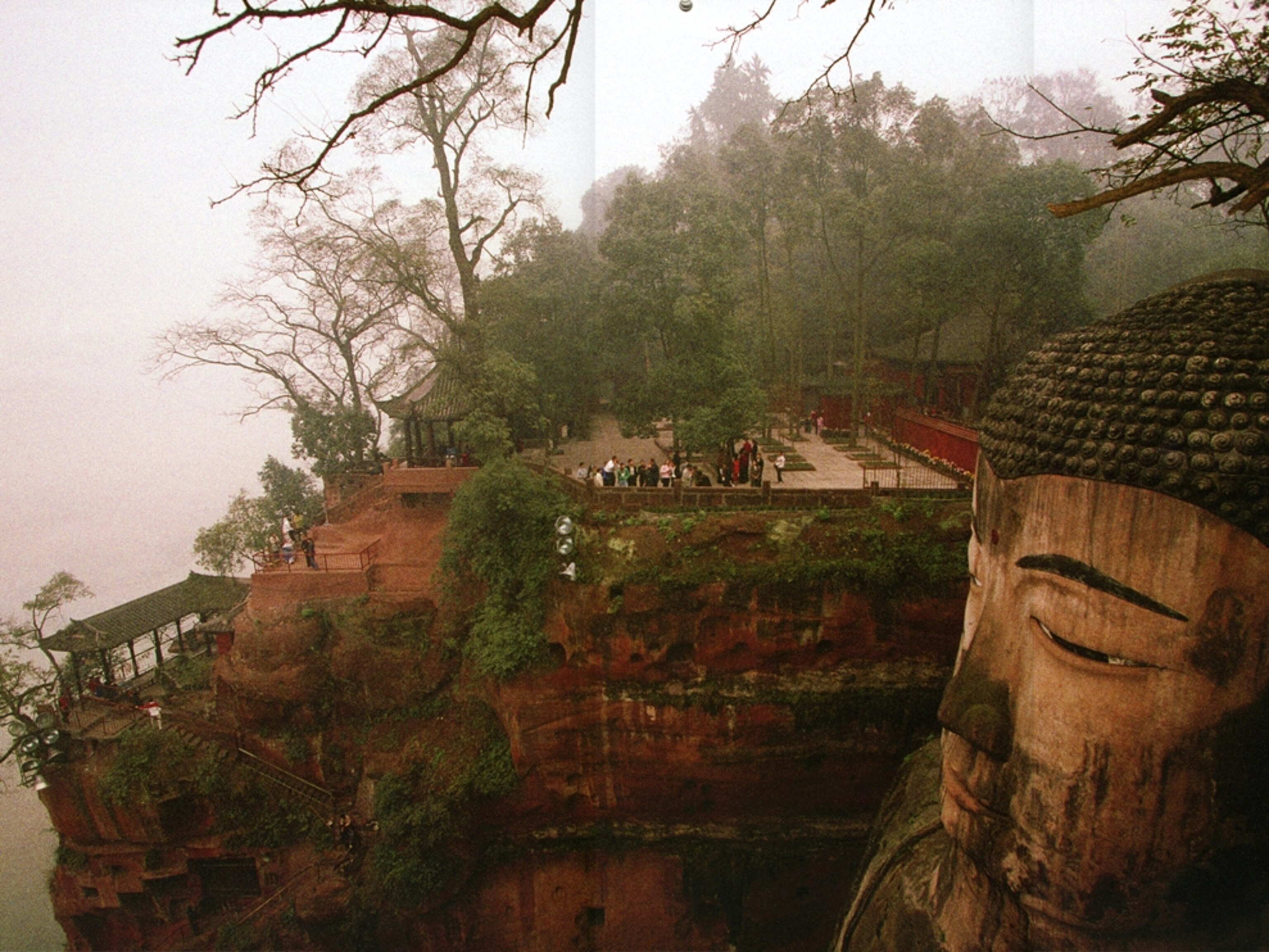
I've seen many many Buddhas during my decades as a photographer in Asia," says veteran China shooter Michael Yamashita, "and this Buddha, in the city of Leshan in Sichuan Province, is the most stunning. It is the largest Buddha in the world—233 feet high (71 meters)—carved right out of a cliffside that drops almost sheer to a river below. The huge figure sits in a sort of alcove overlooking the river, which makes it look enthroned. Arriving by boat, I was utterly unprepared for the enormity, the scale, of the thing." A World Heritage site dating to the eighth century and positioned at the confluence of three rivers as a guardian for boatmen, the Giant Buddha of Leshan took more than 80 years to carve.
See more photos taken by photojournalists with a strong connection to China in "My China," in the January/February 2008 issue of National Geographic Traveler.
-
Photograph by Chien-min Chung
Ferraris on display before the Great Hall of the People catch the attention of Chinese soldiers. Likewise, the clashing symbols of capitalist excess and implacable communism catch the eye of Chien-min Chung, a Taiwan-born photographer who visited mainland China for the first time in the 1990s. "The picture shows how far China has advanced," he says, "with pricey Italian sports cars parked outside the halls that Mao once walked." "It's amazing how fast people have embraced car culture," Chung says. "And cars are just one symbol of the new economy that you see every day. Remember, modern China is less than 60 years old, and we're experiencing change on a scale never before seen. I have high hopes for China."
See more photos taken by photojournalists with a strong connection to China in "My China," in the January/February 2008 issue of National Geographic Traveler.
-
Photograph by Chan Yat Nin
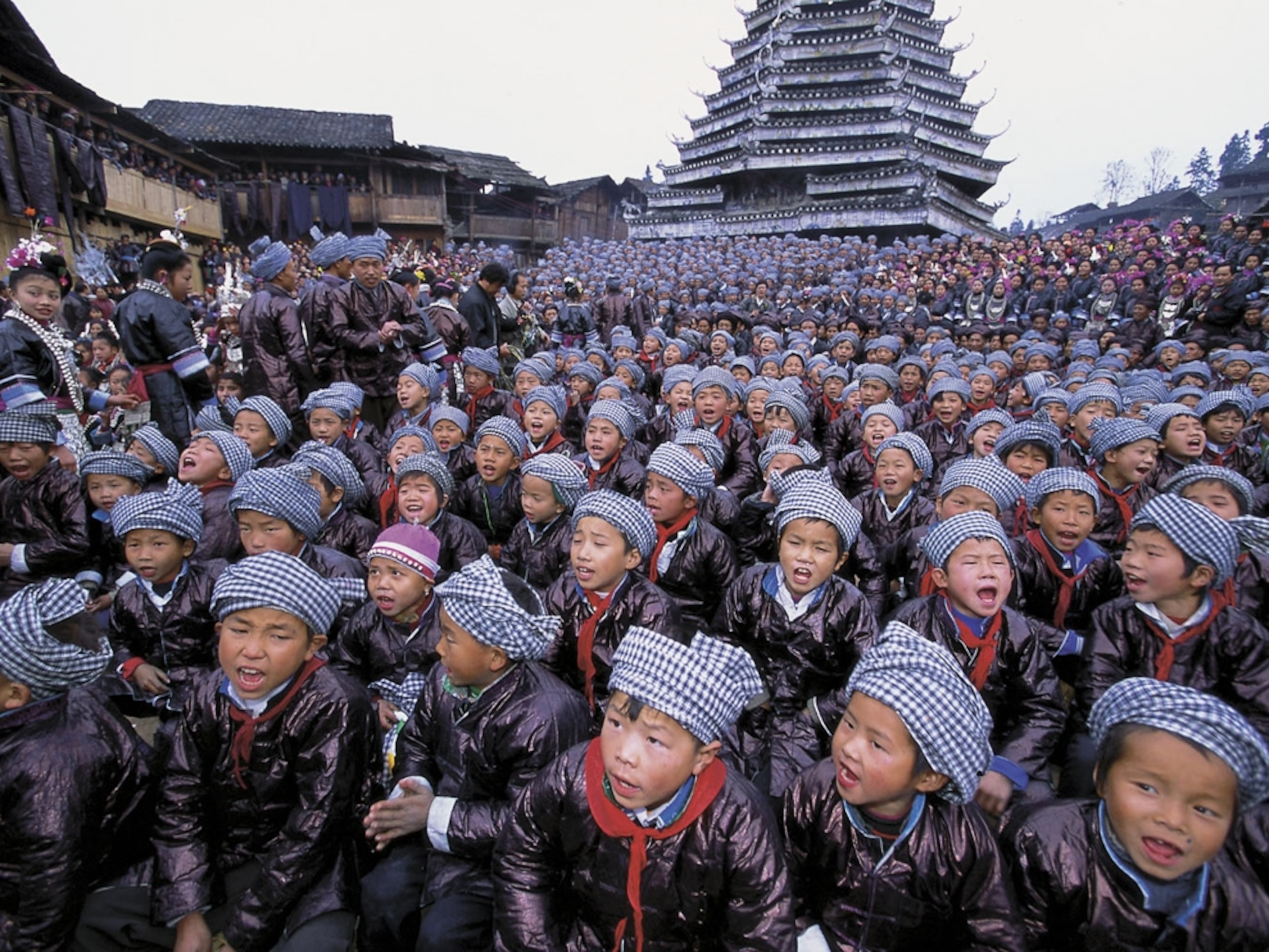
In the hamlet of Xiaohuang, also known as "music paradise," more than a thousand members of the Dong tribe gather to sing during a fall festival. "There are some 20 choirs in this village," says photographer Chan Yat Nin. "They sing in a graceful, rhythmic, a cappella style, called Dage, that is very unusual among Chinese tribal music." The Dong people, one of China's many ethnic minority groups, number almost three million. Concentrated in Hunan, Guizhou, and Guangxi Provinces in south central China, they have their own language, architectural styles, and traditions. Chan was born in Hong Kong and grew up in the city of Guangzhou (formerly Canton) about 75 miles (121 kilometers) to the north. "A photograph cannot convey the beauty of sound," says Chan, "but the innocent and brilliant expressions on the faces in the picture show that these children's hearts are filled with music."
See more photos taken by photojournalists with a strong connection to China in "My China," in the January/February 2008 issue of National Geographic Traveler.
-
Photograph by Justin Guariglia
The Shaolin Temple in central China, recognized as the birthplace of both Zen Buddhism and the martial arts, doesn't give up its secrets easily. American photographer Justin Guariglia made repeated visits over five years just to get permission to photograph the monks who live there. For the three years that followed, he documented the monks' lives behind closed gates for a picture book. In this image, shot in a bamboo garden, monk Shi Yan Lang performs a series of movements called "Through the Shoulder Fist." Such routines, repeated by rote, keep the monks fit and help them achieve a meditative state. "The competitive style of kung fu is called wushu," Guariglia says. "It is entertaining, but there's no Zen to it. I photographed the classical Shaolin kung fu, which is practiced to develop yourself as a human being."
See more photos taken by photojournalists with a strong connection to China in "My China," in the January/February 2008 issue of National Geographic Traveler.
Shop National Geographic
Top Picks for Travel
- Enter Now! Traveler Photo Contest
- Best of the World Weekly
- Call for Nominations: Travelers of the Year
- How to Become a Nat Geo Photographer
- Top 10 Islands
- Don George's #TripLit Pick for June
- Download City Guides App
- Photos: Galicia, Spain
- Photo Gallery: World's Best Ecolodges
- Tips for Traveling Couples
Advertisement
Our Trips
2013 Traveler Photo Contest
-
Share Your Best Travel Photos
Enter to be featured in our weekly galleries and win a grand prize trip to the Galápagos.