-
Adobe Church, San Pedro de Atacama
Photograph by Richard T. Nowitz
The adobe, colonial-era Church of San Pedro dates to the early days of Catholicism in San Pedro de Atacama, but the village’s history stretches back much further. Thousands of years ago it was an oasis town in northern Chile’s dry highlands—and home to the Atacama culture, which flourished there. Today, the village hosts archaeologists and tourists seeking “otherworldly” local scenery such as salt flats, geysers, rock formations, and dark skies for stargazing.
-
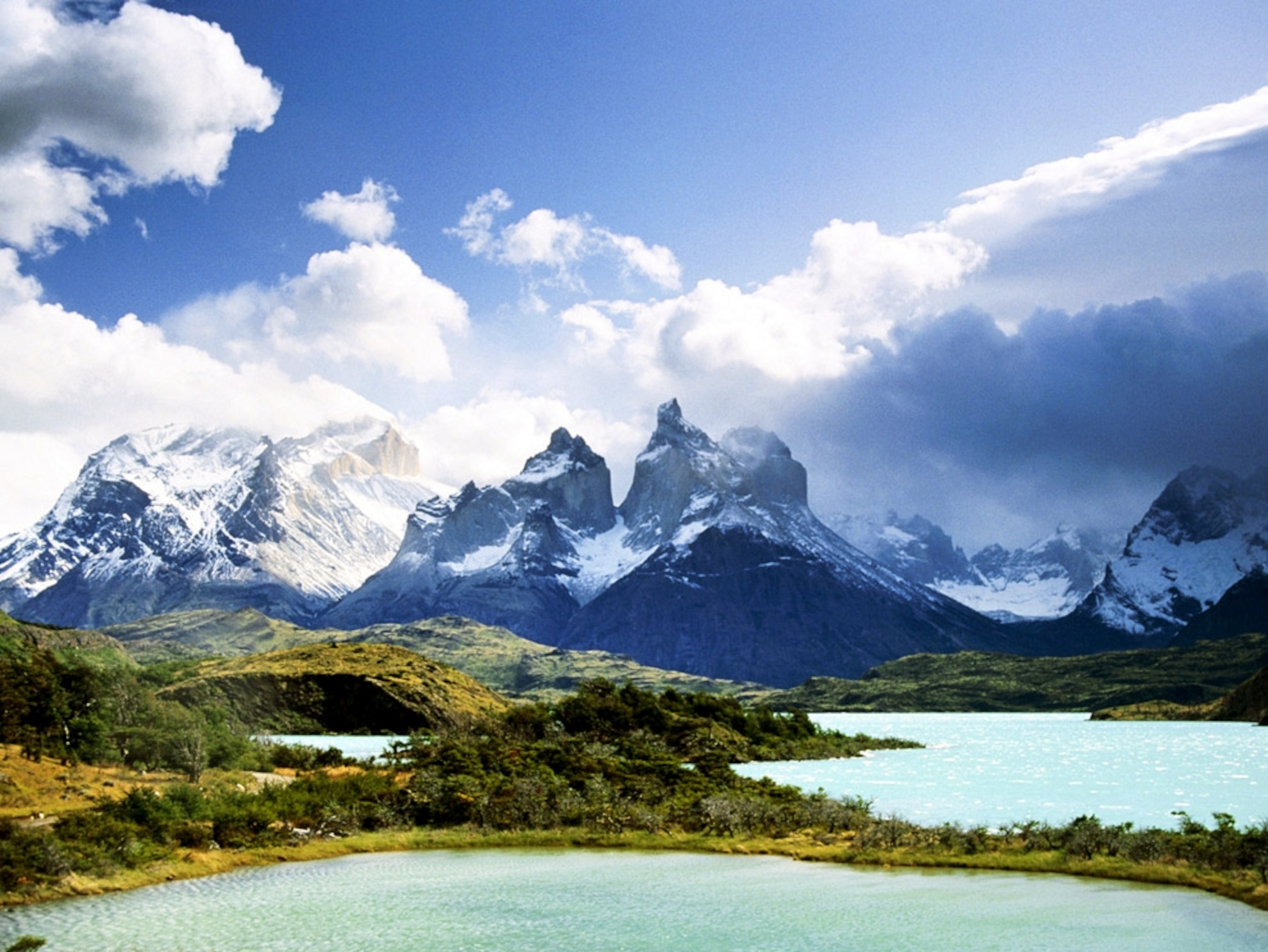
Torres del Paine
Photograph by Jerry Alexander/Getty Images
Chile "was invented by a poet," according to Pablo Neruda, who might have had in mind the inspiring mountain vistas of Torres del Paine. The national park's jaw-dropping scenery includes not just glaciers and granite peaks but also lakes, forests, and open steppes. Outdoor enthusiasts worldwide dream of making a Patagonian pilgrimage and tackling the weeklong Paine Circuit, a trek around the massif.
-
Vineyard
Photograph by Paul Harris/Photo Library
Gathering grapes, such as this chardonnay variety, is a long-standing tradition at Cousiño Macul. The Chilean vineyard has been in the hands of its founding family since 1856, but winemaking in the area began centuries earlier. The Spanish crown granted conquistador Juan Jufré the Hacienda Macul in 1564, when he began to grow grapes in the ideal clime.
-
Easter Island
Photograph by Michael Dunning/Getty Images
Countless tourists have traveled to Easter Island—one of Earth’s most remote inhabited places, some 2,300 miles (3,700 kilometers) from the mainland—to see its mysterious moai and ask, why? So far, the nearly 900 stone faces haven’t answered, and scientists have been stumped. Experts think that Polynesian settlers arrived on the island around A.D. 1200 and began creating the moai soon afterward. They also began cutting down the island’s trees and shrubs, potentially unleashing an environmental disaster that eventually left the island hauntingly empty.
-
Santiago
Photograph by Richard T. Nowitz
Santiago is the cosmopolitan capital of Chile, a nation in which nearly nine out of ten people live in urban areas. Four out of ten call Santiago home. The city boasts an enviable array of restaurants, museums, and cafés in which to while away the day. But wilderness isn’t far: Santiago is ringed by towering mountains that provide visitors and locals alike an easy escape.
-
Andean Glacier
Photograph by Gustavo Dienstmann, My Shot
A massive Andean glacier, part of the Southern Patagonian ice field, comes to a spectacular terminus in the waters of a Torres del Paine lake. Scientists say that nearly nine out of ten of the park’s glaciers are thinning or retreating. But other parts of Torres del Paine are doing better: Vegetation on once overgrazed lands has bounced back, as have the llama-like guanacos, which were near extinction.
-
San Antonio
Photograph by Rodrigo Anguita, My Shot
Small boats lie at anchor in San Antonio, evoking a traditional fishing community. But much larger ships also dock here. This city has become Chile’s primary big-ship cargo port, moving an average of some 12 million tons of goods each year.
-
Presidential Palace, Santiago
Photograph by Richard T. Nowitz
Guards stand watch outside La Moneda, the presidential palace in Santiago. Chile returned to democracy nearly two decades ago, but it continues to struggle with a painful past—thousands were arrested, tortured, or killed during the reign of Gen. Augusto Pinochet.
-
Viña del Mar
Photograph by Laban West, My Shot
The seaside resort of Viña del Mar is often called Ciudad Jardín (“garden city”), for its colorful flowers, lush palm trees, and lovely parks. It draws beach lovers from Santiago and elsewhere around Chile, though only the stalwart swim for long—the Pacific’s Peru Current makes for chilly waters even during the summer season.
-
Cowboy
Photograph by Melissa Farlow
With practiced skill and natural flair a Chilean cowboy, or huaso, lassoes a steer without losing his traditional straw hat, known as a chupalla. Huasos occupy a beloved place in Chile’s culture, just as cowboys do in the U.S. Decked out in the traditional colorful ponchos called chamantos, they’re often seen in parades, rodeos, and other celebrations.
-
Atacama Desert
Photograph by Joel Sartore
Sandwiched between the Andes and the ocean, the Atacama Desert is one of the world’s most arid ecosystems, home to many specially adapted animals found nowhere else. Some parts of the region may not get a drop of rain for years at a time.
-
Fruit Cart, Santiago
Photograph by Gavin Heller/Getty Images
Fresh fruits temp pedestrians on Alameda Bernardo O’Higgins, Santiago’s main thoroughfare, which was first laid out in 1541. The fruit is just one of the reasons that Santiago’s five million inhabitants often call the road Alameda de Delicias—“boulevard of delights.”
-
Iglesia del Sagrado Corazón, Puerto Varas
Photograph by Richard T. Nowitz
The Iglesia del Sagrado Corazón overlooks the city of Puerto Varas, pristine Lake Llanquihue, and one of the Lake District’s stunning snowcapped volcanoes. The church, constructed during World War I, is modeled on the Marienkirche of Germany’s Black Forest and reveals Chile’s strong European roots. Most Chileans trace at least some of their ancestors back to Europe; only around 5 percent are indigenous peoples.
More Travel Photo Galleries
Shop National Geographic
Top Picks for Travel
- Enter Now! Traveler Photo Contest
- Best of the World Weekly
- Call for Nominations: Travelers of the Year
- How to Become a Nat Geo Photographer
- Top 10 Islands
- Don George's #TripLit Pick for June
- Download City Guides App
- Photos: Galicia, Spain
- Photo Gallery: World's Best Ecolodges
- Tips for Traveling Couples
Advertisement
Our Trips
2013 Traveler Photo Contest
-
Share Your Best Travel Photos
Enter to be featured in our weekly galleries and win a grand prize trip to the Galápagos.