-
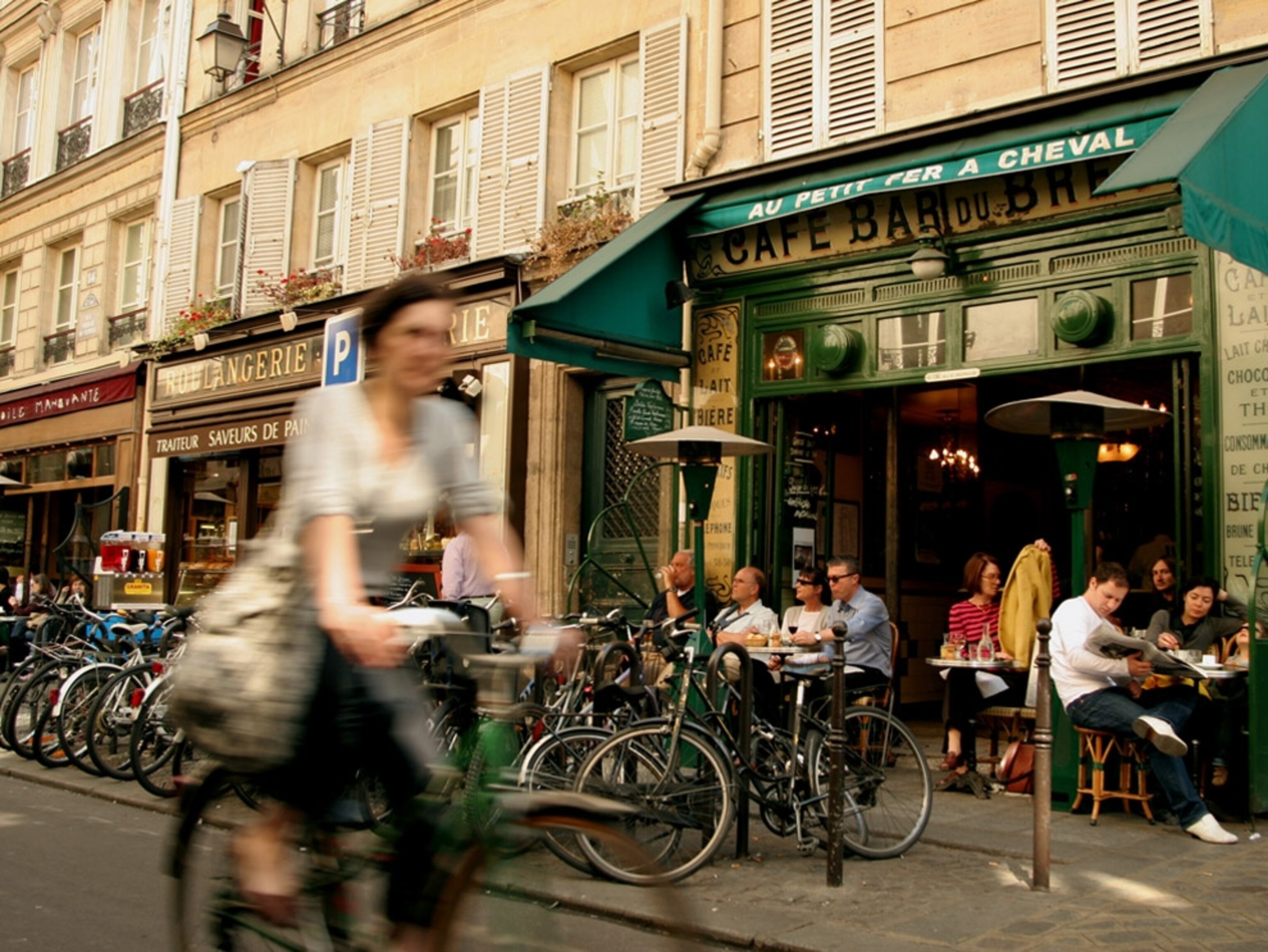
France
Photograph by Steven Greaves, My Shot
Paris is a densely settled metropolis, but one with numerous small parks and gardens. Most public places have benches or chairs, which encourage people to stop, rest, and talk. And of course sidewalk cafés, like this one, are everywhere.
-
Notre Dame
Photograph by Mark Cannon, My Shot
The Cathedral of Notre Dame in Paris was among the first churches to have flying buttresses. It’s also known for its stained-glass windows, pointed arches, and rib vaulting and was crucial in the development of the French Gothic style. Construction began in 1163, during the reign of Louis VII.
-
Paris Street
Photograph by Fred Derwal/Getty Images/Hemis.fr RM
Sunset falls over Paris, where the Eiffel Tower looms large over much of the city, and cafes seem to mark every corner.
-
Champagne-Ardenne
Photograph by Fantuz Olimpio/SIME-4Corners Images
Grapes ripen in orderly rows at a vineyard in Champagne-Ardenne. Just a 90-minute drive from Paris, the region has many small Champagne houses, each with its own special method for creating a signature bubbly.
-
Farmers
Photograph by Kiritin Beyer, My Shot
The number of French farming villages has dwindled, a consequence of mechanization, increasing job opportunities in cities, and other factors. Many traditional villages continue to struggle, surviving solely because of tourism.
-
Tour de France
Photograph by Jasper Juinen/Getty Images
The Tour de France, the world’s premier cycling race, has several daylong stages, with the lead rider wearing the race's iconic yellow jersey. The route varies every year, taking riders and fans through mountains, tiny towns, and the streets of Paris.
-
Wine Shop, Paris
Photograph by Alain Potignon/Paris Tourist Office
A Paris shopkeeper takes a break in the doorway of his wine shop on Boulevard Haussman. Fine wine is as quintessentially French as a baguette and soft cheese, and the three have made many a meal.
-
Notre Dame on the Seine
Photograph by Daniel Lockhart, My Shot
The French call the Seine le fleuve civilisateur, the civilizing river. On its banks are museums, gardens, the Eiffel Tower, and Notre Dame, seen here.
-
The Orangerie at Versailles
Photograph by Tracy Weddle, My Shot
Beloved by Louis XIV, orange trees outline a formal garden at Versailles, the royal residence just outside Paris. During the winter, the fruit trees are moved inside the Orangerie, the building that fronts the ornamental parterre.
-
Louvre, Paris
Photograph by Michael Gurrey, My Shot
World-renowned architect I. M. Pei designed the glass and steel pyramid that tops the main entrance to the Louvre museum in Paris, controversial when it debuted in 1989. The Louvre stretches almost half a mile (0.8 kilometers) along the River Seine, farther than two Eiffel Towers laid end to end. Its priceless works of art include the “Mona Lisa,” the “Venus de Milo,” and more than 20,000 other Greek and Roman antiquities.
-
Fields of Lavender
Photograph by Shaun Egan/Getty Images
Fragrant fields of lavender are common in French provinces such as Provence, where lavender festivals help stimulate tourism. Lavender has long been important to the southeast region’s economy and identity.
-
Monet’s "Nymphéas" at the Musée de l'Orangerie
Photograph by Marc Bertrand/Paris Tourist Office
The French government spent millions of dollars renovating Paris's Musée de l'Orangerie to better showcase Monet’s famous "Nymphéas" series. Half of the eight enormous paintings of water lilies depict the flowers at dawn, half at dusk.
-
French Fashion
Photograph by Catherine Karnow
Designer Jerome L'Huillier works with a model in his Paris shop. The city was a world fashion center long before Marie Antoinette made a habit of exceeding her annual clothing allowance of 120,000 gold livres. Today designers and fashion aficionados flock to the city each July and January to view the newest couture—which translates literally to “sewing”—collections.
-
Chenonceau Castle, Loire Valley
Photograph by Irek/SIME-4Corners Images
Boaters and bikers alike enjoy the scenery around Chenonceau Castle in the Loire Valley. King Henri II made a gift of the elegant Chenonceau palace to his mistress Diane de Poitiers. After his death, she was forced by his wife, Catherine de Médicis, to exchange it for the nearby Chaumont chateau.
-
The Cliffs of Cassis
Photograph by Michael Melford
The jagged cliffs of Cassis drop down to the Mediterranean Sea. The region of the Cote d'Azur, or French Riviera, is renowned for its scenic harbors, white cliffs, and wines.
-
Cannes Film Festival
Photograph by Hugo Philpott, My Shot
Once a tiny fishing village on the French Riviera, Cannes is now filled with luxury hotels, high-end restaurants, and high-profile tourists. The seaside city is also home each May to the prestigious Cannes Film Festival, attended by celebrities such as Paris Hilton, seen here.
-
Eiffel Tower
Photograph by Milan Patnaik, My Shot
Built for the 1889 World's Fair in Paris, the Eiffel Tower, with its record height and panoramic views, didn't do much for the critics, who called it unsightly. Today it's one of the most recognizable buildings in the world.
-
Arc de Triomphe, Paris
Photograph by Arnaud Chicurel/Getty Images/Hemis.fr RM
Napoleon commissioned the imposing Arc de Triomphe in 1806 to celebrate his army’s military victories. This architectural anchor of old Paris, at the crossroads of 12 streets, has been at the center of numerous victory marches, Bastille Day celebrations, and state funerals.
-
Cannes
Photograph by Raul Touzon/National Geographic Stock
Cannes’s Suquet Quarter is the city’s old town, with narrow streets winding up the hill and a 12th-century tower at the top.
More Travel Photo Galleries
Shop National Geographic
Top Picks for Travel
Advertisement
Our Trips
2013 Traveler Photo Contest
-
Share Your Best Travel Photos
Enter to be featured in our weekly galleries and win a grand prize trip to the Galápagos.