-
Photograph by Brooks Walker
Visitors create their own heat at a thermal zone at the Krafla caldera in northern Iceland. Lava flow from the 1980s (upper left) still mars the landscape.
Read more about Iceland in “Life Atop a Cauldron” in the April 2011 issue of National Geographic Traveler.
-
Photograph by Brooks Walker
Quaint farmhouses line the Skálavegur Road as it passes through Ysti-Skáli, along Iceland’s south coast. Despite sitting at the foot of Eyjafjallajökull, the community was relatively unaffected by last year’s eruption.
Read more about Iceland in “Life Atop a Cauldron” in the April 2011 issue of National Geographic Traveler.
-
Photograph by Brooks Walker
About 2,000 sheep, left to graze in the Fjallabak Nature Reserve during the summer months, are rounded up each September. The reserve, established in 1979, offers hikers 181 square miles of wild tranquility about 1,600 above sea level.
Read more about Iceland in “Life Atop a Cauldron” in the April 2011 issue of National Geographic Traveler.
-
Photograph by Brooks Walker
A hiker heads down the Víti explosion crater in Iceland’s central highlands, an area accessible only in summer. Víti’s water is warm and mineral-rich, inviting some folks to take a dip despite warnings to the contrary. In the background to the left sits Iceland’s deepest lake, Öskjuvatn.
Read more about Iceland in “Life Atop a Cauldron” in the April 2011 issue of National Geographic Traveler.
-
Photograph by Brooks Walker
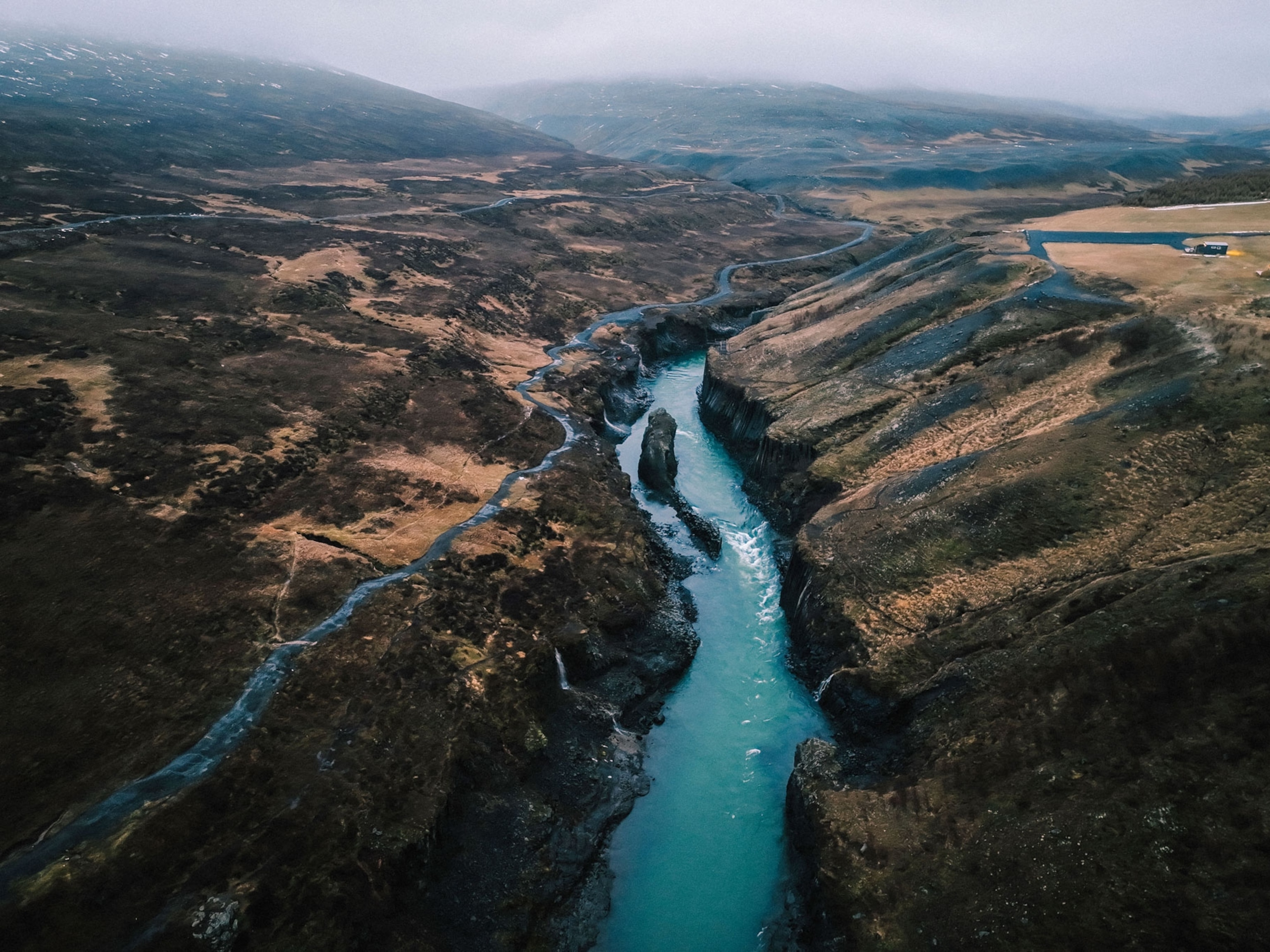
Formations of basalt columns amaze visitors at Jökulsárgljúfur gorge, a “Louvre of lava” in Iceland’s Vatnajökull National Park.
Read more about Iceland in “Life Atop a Cauldron” in the April 2011 issue of National Geographic Traveler.
-
Photograph by Brooks Walker
The north coast port town of Húsavík, reputedly Europe’s whale-watching capital, attracts visitors interested in whale-watching, birding, and sailing adventures in Skjálfandi Bay.
Read more about Iceland in “Life Atop a Cauldron” in the April 2011 issue of National Geographic Traveler.
-
Photograph by Brooks Walker
Crowberries, the edible fruit of a dwarf evergreen shrub, grow throughout Iceland and are plucked and eaten, made into a juice, or served as a natural food dye.
Read more about Iceland in “Life Atop a Cauldron” in the April 2011 issue of National Geographic Traveler.
-
Photograph by Brooks Walker
Cyclists tackle the Sprengisandur track across the island’s highland interior. The jeep road, open in summer, follows the main volcanic rift zone.
Read more about Iceland in “Life Atop a Cauldron” in the April 2011 issue of National Geographic Traveler.
-
Photograph by Brooks Walker
A child bundles up against the summer’s cold after a swim at Seljavellir pool near Eyjafjallajökull on Iceland’s southern coast. The first pool at Seljavellir was built in two days in 1922 of rock and turf.
Read more about Iceland in “Life Atop a Cauldron” in the April 2011 issue of National Geographic Traveler.
-
Photograph by Brooks Walker
The multi-colored highlands in Landmannalaugar near the Hekla volcano beckon hikers June through September. Despite the area’s growing season of just two months, some 150 species of flowering plants and ferns inhabit the area.
Read more about Iceland in “Life Atop a Cauldron” in the April 2011 issue of National Geographic Traveler.
-
Photograph by Brooks Walker
Cousin to the famous Blue Lagoon near Reykjavík in the southwest corner of Iceland, the Mývatn Nature Baths spa opened in 2004. It has the same soothing temperatures and cobalt color, an effect of suspended minerals in the water.
Read more about Iceland in “Life Atop a Cauldron” in the April 2011 issue of National Geographic Traveler.
-
Photograph by Brooks Walker
Iceland is home to close to two-dozen waterfalls including Skógafoss, which flows from the watershed between the Eyjafjalla and Mýrdals glaciers. Its spray is so voluminous that on sunny days single or double rainbows appear near the falls.
Read more about Iceland in “Life Atop a Cauldron” in the April 2011 issue of National Geographic Traveler.
-
Photograph by Brooks Walker
Signs stuck in the cinders indicate family homes engulfed by the January 1973 fissure eruption at the fishing port town of Vestmannaeyjar, known fittingly as the “Pompeii of the North,” on the Westman island of Heimaey. Though the eruption destroyed some 300 homes, all island residents were evacuated to the mainland and the harbor was saved.
Read more about Iceland in “Life Atop a Cauldron” in the April 2011 issue of National Geographic Traveler.
-
Photograph by Brooks Walker
The glacial lagoon of Gígjökull, an outlet glacier just north of Eyjafjallajökull, was filled with ash by last spring’s eruption.
Read more about Iceland in “Life Atop a Cauldron” in the April 2011 issue of National Geographic Traveler.
Shop National Geographic
Top Picks for Travel
- Enter Now! Traveler Photo Contest
- Best of the World Weekly
- Call for Nominations: Travelers of the Year
- How to Become a Nat Geo Photographer
- Top 10 Islands
- Don George's #TripLit Pick for June
- Download City Guides App
- Photos: Galicia, Spain
- Photo Gallery: World's Best Ecolodges
- Tips for Traveling Couples
Advertisement
Our Trips
2013 Traveler Photo Contest
-
Share Your Best Travel Photos
Enter to be featured in our weekly galleries and win a grand prize trip to the Galápagos.