-
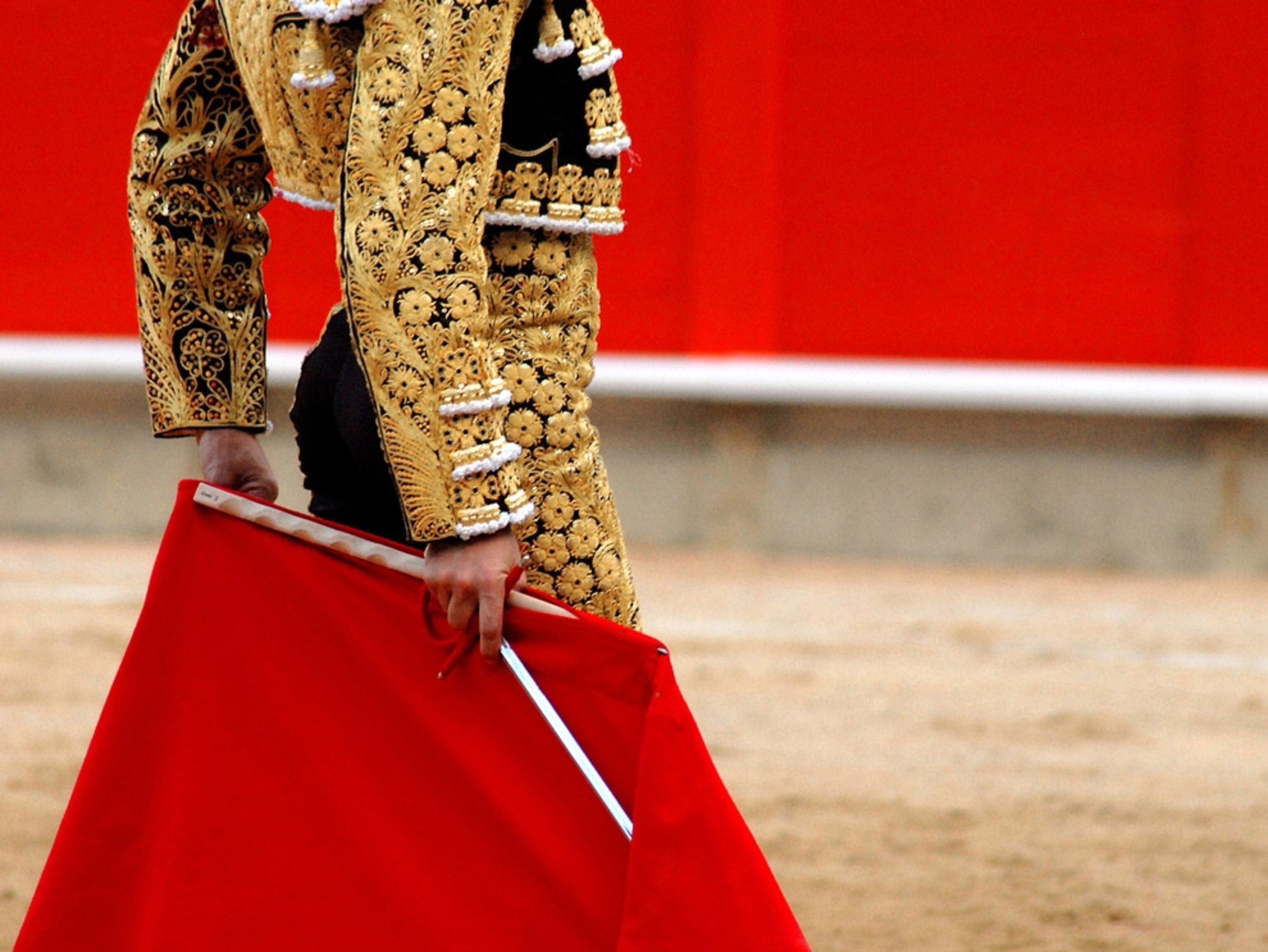
Spanish Bullfighter
Photograph by Sigfrid López/Getty Images
A matador stands with cape at the ready in a bullfighting ring in Spain. The ancient sport draws crowds across the country, and bullfighters attain celebrity status.
-
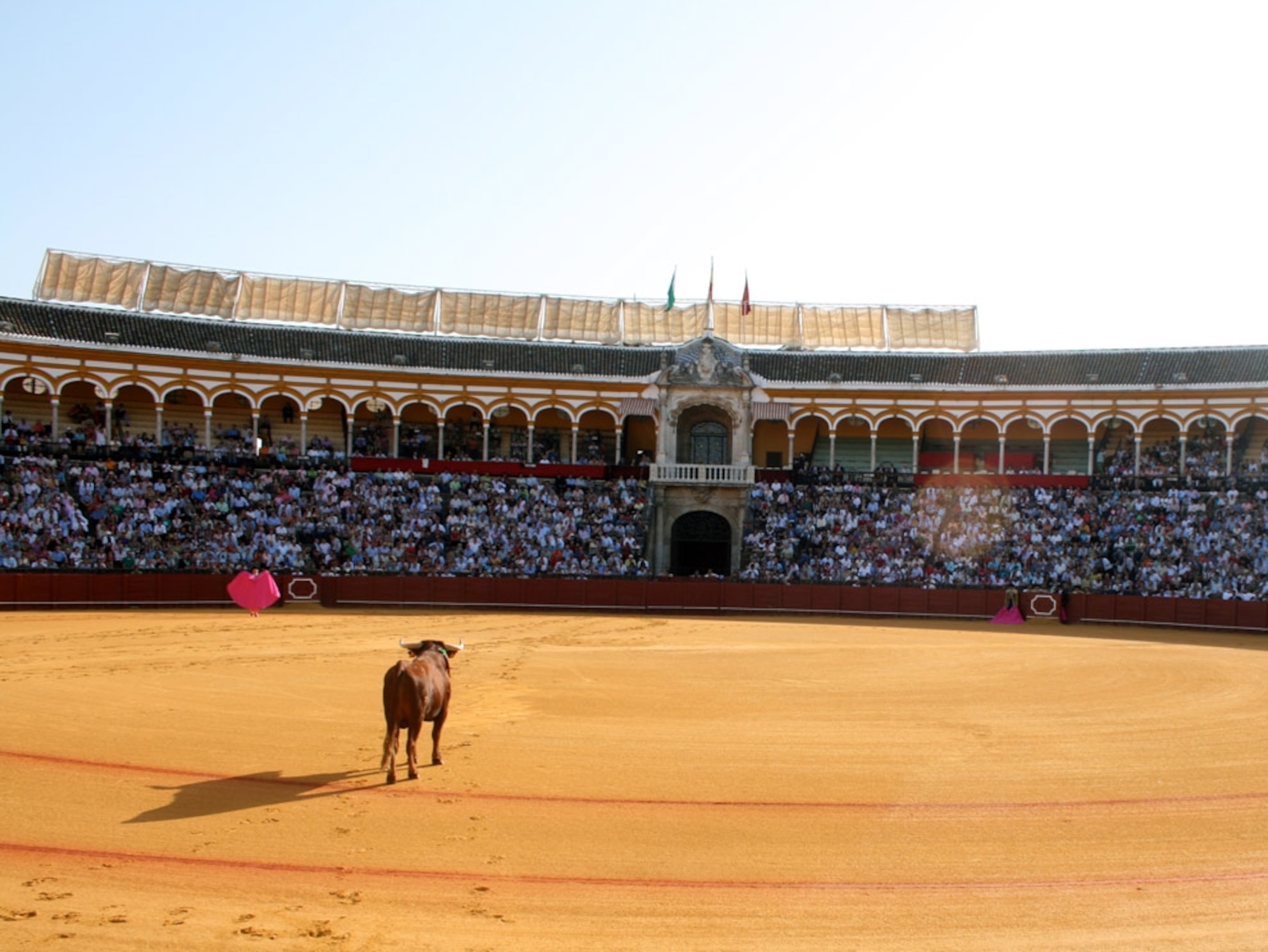
Bullfighting Ring, Seville
Photograph by Ali Kate Cherkis, My Shot
The well-to-do sit in the sombra (shade) instead of the sol (sun) section at Seville’s much-vaunted Real Maestranza de Caballería bullfighting ring. The two white indented rectangles indicate where bullfighters can take refuge from a charging bull.
-
Seville Bar
Photograph by Mark Horn/Getty Images
Men meet in a bar in the Triana neighborhood of Seville. The capital of Andalusia, Seville shines as the stronghold of culture and art in southern Spain.
-
Metropolis Building, Madrid
Photograph by Jonathan North, My Shot
Headlights blur past the Metropolis Building, a Madrid landmark. The Spanish capital is also its banking and business center.
-
Flamenco Dancing, Barcelona
Photograph by Christopher Pillitz/Getty Images
Children practice the art of flamenco at a fair in Barcelona. Quintessentially Spanish, flamenco echoes the rhythm of medieval ballads sung by Muslim minstrels.
-
Temple of Debod, Madrid
Photograph by Robert Barrett, My Shot
The ancient Temple of Debod stood in Egypt’s Nile Valley until the building of the Aswan Dam in the 1960s, when the Egyptian government gave it to Spain in gratitude for that country’s help in saving a larger temple. It now stands in a Madrid park, along with a small museum.
-
La Mancha Windmills
Photograph by Mark Cannon, My Shot
La Mancha’s windmills were famously captured in Miguel de Cervantes’s Don Quixote, when the bumbling knight of the title rushes the windmills, thinking they’re giants.
-
Canary Islands
Photograph by Fantuz Olimpio/SIME-4Corners
The Canary Islands lie northwest of Africa and have five distinct environmental zones, ranging from sea level to snowcapped peaks. The name of the archipelago comes from the Latin word canis, meaning “dog,” because early explorers found large dogs roaming the islands. Canary birds were in turn named after the islands.
-
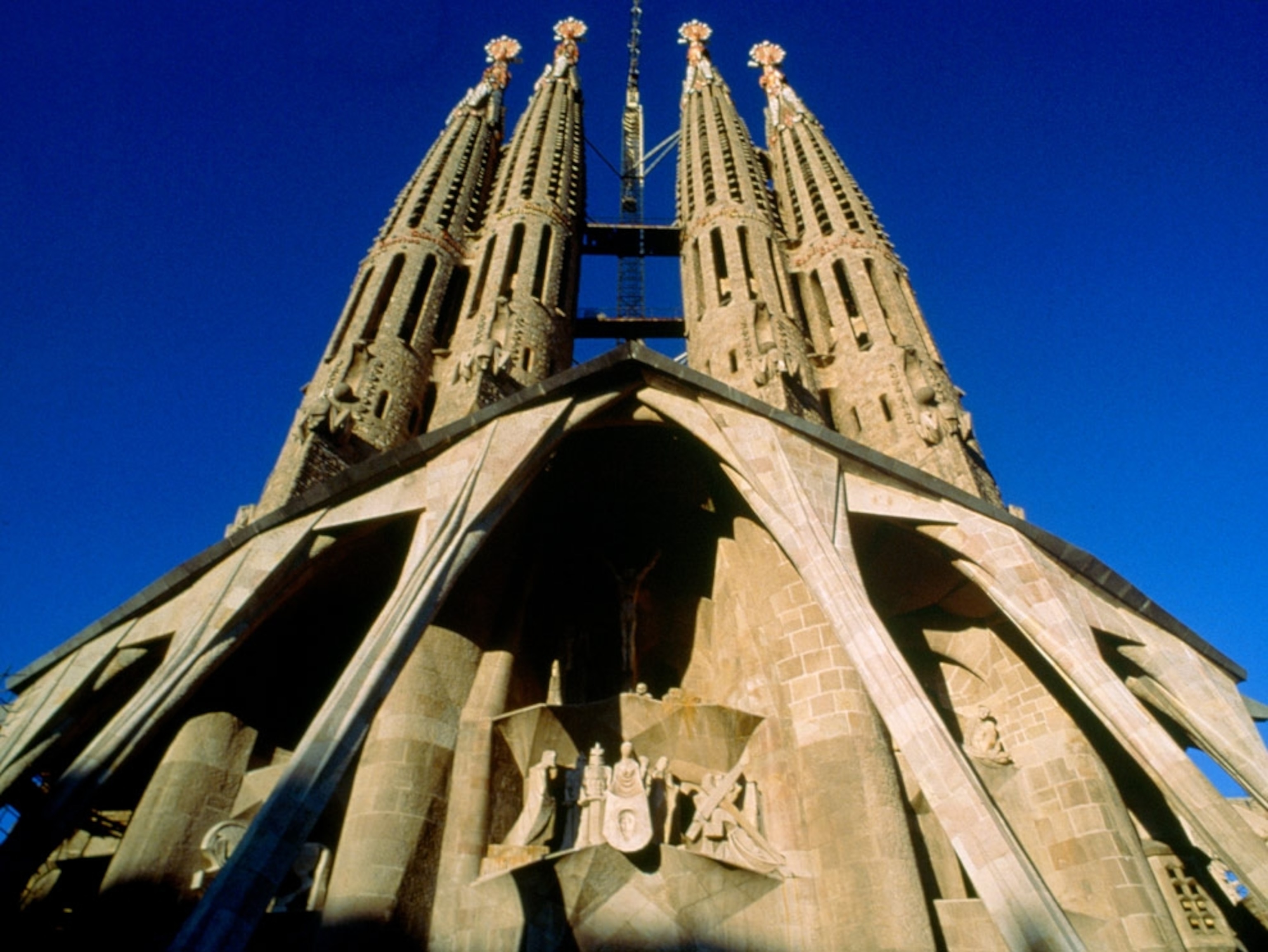
Sagrada Família Church, Barcelona
Photograph by Tino Soriano
Antoni Gaudí’s Temple Expiatori de la Sagrada Família in Barcelona is still unfinished more than a century after construction began. The Catalan architect's many fantastic works give the city a distinctive look.
-
Semana Santa, Seville
Photograph by Richard Ross/Getty Images
During Seville’s Semana Santa, members of cofradias, or lay religious brotherhoods, walk through the streets in complete silence, wearing voluminous tunics and tall conical hoods that were originally designed to hide the identity of the penitent. They also carry Seville’s famous pasos, richly ornamented platforms bearing religious iconography and images.
-
San Sebastián Pintxos
Photograph by Dallas Stribley/Lonely Planet Images
San Sebastián, on the Cantabrian coast in Basque country, is known as a gastronomic hotbed. Especially famous are its all-male cooking clubs, where men cook for themselves and fellow club members. A San Sebastián staple are pintxos, the small bites called tapas elsewhere in Spain.
-
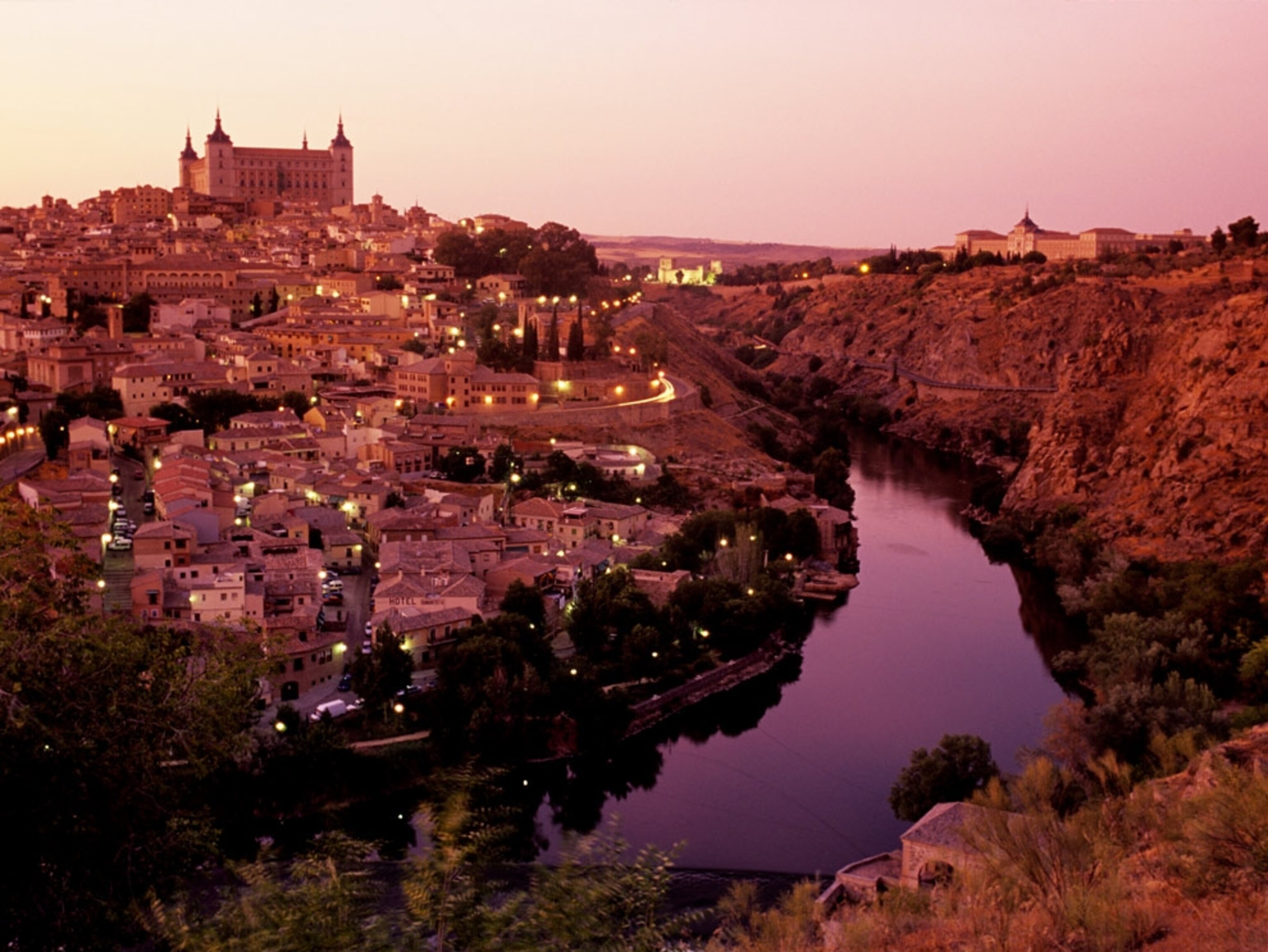
Toledo
Photograph by Tino Soriano/National Geographic Stock
Toledo’s distinctive twisted streets and covered passageways evoke the city’s golden years as part of the Arab Empire. El Greco, the flamboyant Greek painter, spent years capturing the beauty of the city and its occupants.
-
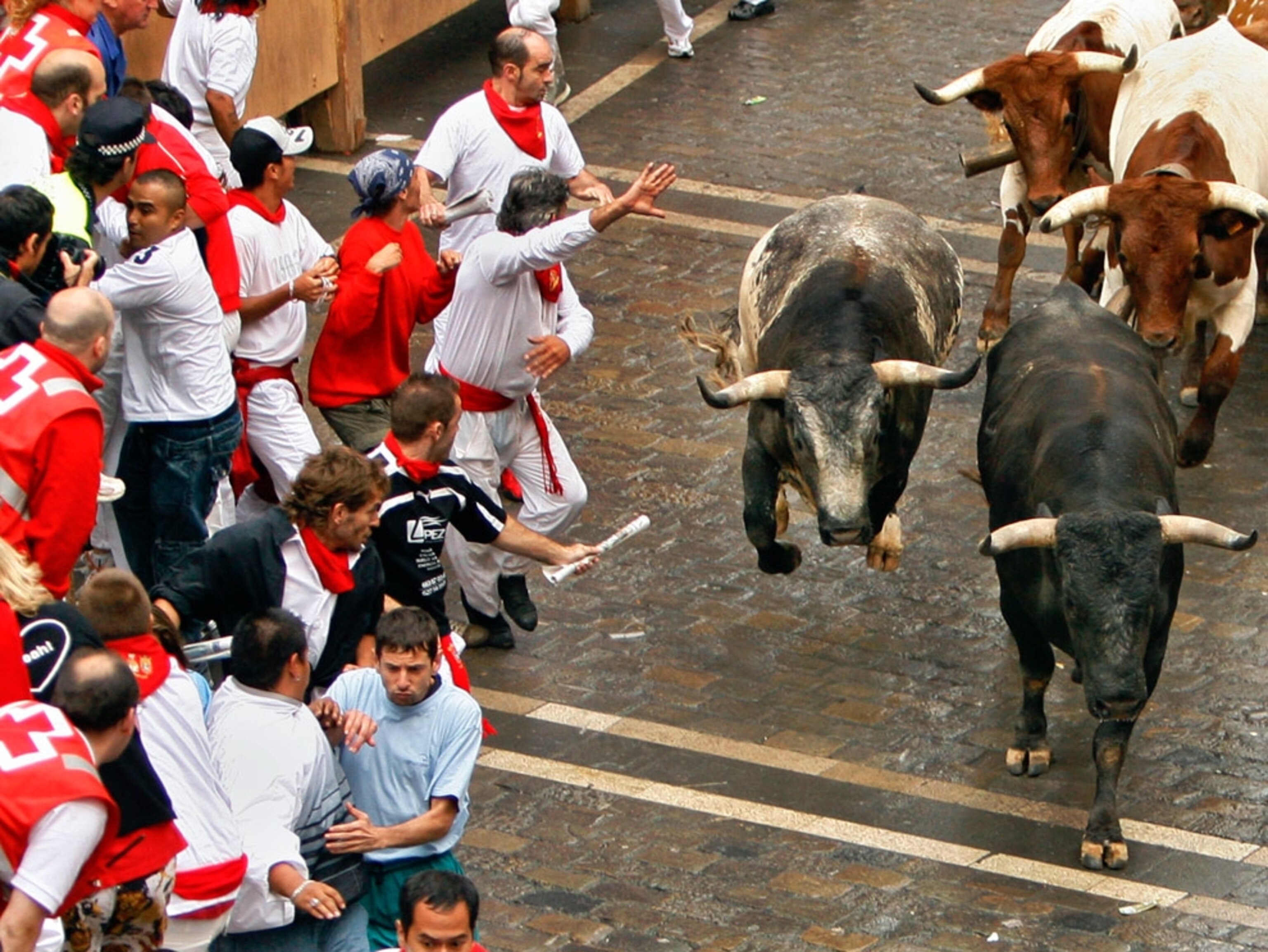
Running of the Bulls, Pamplona
Photograph by Alvaro Barrientos/Associated Press
Pamplona’s festival of San Fermín gained international renown after Ernest Hemingway wrote about it in The Sun Also Rises. The sometimes deadly “running of the bulls” happens each morning of the nine-day festival.
-
Guggenheim Museum Bilbao
Photograph by Javier Larrea/photolibrary.com
Bilbao was just a small industrial town overflowing with immigrants—until it built the Guggenheim Museum Bilbao, designed by Frank Gehry. Now it’s a bustling tourism center, an inspiration for mayors around the world hoping for a “Gehry effect.”
-
Rodellar
Photograph by Keith Ladzinski, Aurora
A small bridge spans a stream near the village of Rodellar in northern Spain, a region renowned for its climbing. And the canyons of the Sierra de Guara offer superb canyoneering.
-
Valencia Aquarium
Photograph by Laura Dos Santos, My Shot
Valencia’s arts and science complex is dominated by L'Oceanogràfic, the largest aquarium in Europe, with ten different underwater habitats. The complex also has Europe’s largest planetarium, an IMAX theater, and an opera house.
-
Mallorca Market
Photograph by Holger Leue/photolibrary.com
Customers wait in a busy shop in a market in Palma, Mallorca. The island is one of the four major Balearic Islands—the others are Menorca, Ibiza, and Formentera—and it was colonized by the Romans in the second century B.C. The Romans also founded Palma, the principal city of the Balearics.
-
Plaza de Mayor, Salamanca
Photograph by Michaela Klusman, My Shot
The city of Salamanca is best known for two things: majestic cathedrals and the many students attending one of three universities. The University of Salamanca was founded in 1218, which makes it the third oldest university in Europe, after Bologna and Oxford.
-
Costa Brava
Photograph by Michael Cadieux, My Shot
Calella de Palafrugell is one of several fishing villages turned resort on Catalonia’s Costa Brava, which means “rugged coast.” Many fishing towns became resorts after Generalissimo Francisco Franco began encouraging tourism in the 1950s.
More Travel Photo Galleries
Shop National Geographic
Top Picks for Travel
- Enter Now! Traveler Photo Contest
- NEW! Best of the World Weekly
- Call for Nominations: Travelers of the Year
- How to Become a Nat Geo Photographer
- Top 10 Islands
- Don George's #TripLit Pick for June
- Download City Guides App
- Photos: Galicia, Spain
- Photo Gallery: World's Best Ecolodges
- Tips for Traveling Couples
Advertisement
Our Trips
2013 Traveler Photo Contest
-
Share Your Best Travel Photos
Enter to be featured in our weekly galleries and win a grand prize trip to the Galápagos.