-
African Elephant, Ngorongoro Crater
Photograph by Chris Johns
Once a giant volcano that collapsed inward millions of years ago, the Ngorongoro Crater is today the largest unflooded and intact caldera in the world. Lone bull elephants with imposing tusks—survivors of the ivory trade in decades past—roam the crater floor, while matriarchal elephant herds prefer the surrounding highland forests, which fall away to the tawny plains of the Great Rift Valley.
-
Maasai
Photograph by Randy Olson
A seminomadic ethnic group indigenous to northern Tanzania and southern Kenya, the Maasai people own herds of cattle, sheep, and goats, which they follow seasonally in search of new grazing grounds. Tribesmen are adorned in red-checked blankets called shuka.
-
Plains Zebra
Photograph by Gregg Pasterick, My Shot
Boldly striped in distinctive patterns, no two plains zebras look exactly alike. They are the world’s most widespread species of zebra, occupying the open, grassy plains and woodlands of eastern and southern Africa. With acute vision and hearing, zebras act as an early warning system for other large animals grazing nearby.
-
Herb Harvesting
Photograph by John Stanmeyer
In the highlands of Tanzania, a Wa-arusha man harvests the Chinese herb Artemesia annua, a new crop in Africa and an ingredient in today's best malaria drugs. Sub-Saharan Africa suffers 90 percent of all malaria deaths.
-
Giraffes, Arusha National Park
Photograph by Balazs Buzas, My Shot
A rich tapestry of habitats spanning from tranquil Momela Lakes to rugged Mount Meru, Arusha National Park is northern Tanzania’s safari capital. Frequently spotted in the park are giraffes, the tallest land mammals on Earth.
-
Hadza Man
Photograph by Martin Schoeller
A Hadza man finds the best vantage point for spotting game on the windswept land of central Tanzania. Africa's last remaining hunter-gatherers, the Hadza subsist on wild game, edible plants, and honey, adjusting their diets depending on season and circumstance.
-
Wildebeests
Photograph by Medford Taylor
When the dry season arrives at the peak of summer, herds of wildebeest, antelope, and zebra migrate north from the Serengeti to adjoining Masai Mara National Reserve in pursuit of food and water. Over two million grazing herbivores partake in this annual journey.
-
Ol Doinyo Lengai Volcano
Photograph by Carsten Peter
Ol Doinyo Lengai (“Mountain of God” in Masai) towers above the Rift Valley in a remote corner of northern Tanzania. It is the only volcano in the world to release natrocarbonatite lava—highly fluid lava that erupts at roughly half the temperature of more common basaltic volcanoes. Bizarre geologic formations develop as the lava rapidly hardens and decays.
-
Tourists, Ngorongoro Conservation Area
Photograph by Randy Olson
Camera-wielding visitors pour into Ngorongoro Crater to stalk lions, elephants, and other survivors of a wild Africa that is fading. A top attraction, this extinct caldera brings welcome revenue to Tanzania, one of the poorest nations on Earth. But the tourists also crowd narrow roads, strain scarce water resources, and disrupt wildlife.
-
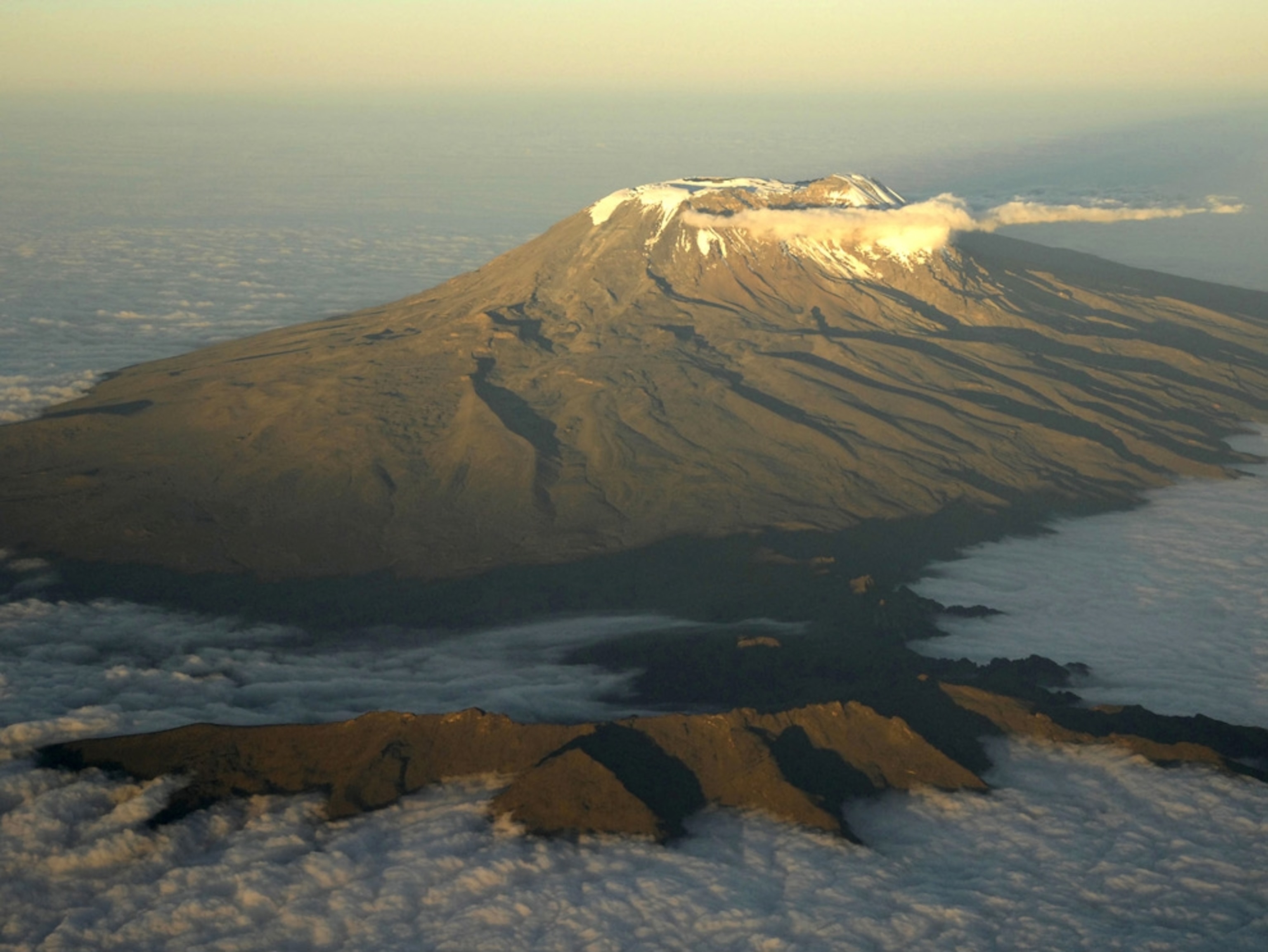
Mount Kilimanjaro
Photograph by Ulrich Doering/Photolibrary
Mount Kilimanjaro’s cone rises majestically from the clouds and soars over Shira Plateau. The mountain's snow cover, made famous in a short story by Ernest Hemingway, is predicted to be gone completely within two decades.
-
Dar es Salaam
Photograph by Ariadne Van Zandbergen/LPI/Getty Images
Dar es Salaam—which means “House of Peace” in Arabic—is the largest and wealthiest city in Tanzania. To many travelers, the city is just a convenient port of call en route to Tanzania’s more exotic locales, but this bustling seaport offers many cultural delights, from lively markets supporting the agricultural economy to colonial-era architecture.
-
Mount Meru Forest
Photograph by Ian Cumming/Getty Images
The centerpiece of Arusha National Park, Mount Meru—an active stratovolcano—offers a rewarding climb through fertile forests and bare rocks up to an unparalleled view of the Rift Valley. At 14,979 feet (4,566 meters) above sea level, Mount Meru’s summit is slightly lower than Kilimanjaro's.
-
Dhow, Zanzibar
Photograph by Paul Harris/AWL/Aurora Photos
A handcrafted boat propelled by one or two lateen sails, the dhow is a popular mode of transport for tourists visiting the white-sand beaches and historic towns around Zanzibar. Once a separate state enjoying a long history of commerce within the Arab world, this Tanzanian archipelago in the Indian Ocean is a colorful fusion of African, Arab, Portuguese, and European cultures.
-
Muslim Wedding, Zanzibar
Photograph by Christopher Pillitz/Getty Images
At a traditional Muslim wedding celebration in Zanzibar, thumping music, ululating women, and spirited shouts fill the air. Nearly all of Zanzibar's and much of Tanzania’s coastal inhabitants adhere to Islam, while inland populations follow Christianity, Hinduism, and indigenous faiths.
-
Baobab Trees, Tarangire National Park
Photograph by Tom Schwabel, My Shot
Baobab trees frame a serene view of night skies in Tarangire National Park. Some species of baobab trees can live for a thousand years—potentially reaching a stunning height of 80 feet (25 meters) and a diameter of 40 feet (12 meters).
-
Robanda
Photograph by Randy Olson
On the western edge of Serengeti National Park, Robanda is a popular place to spend the night while on safari. Fewer than 3,000 people live in this impoverished but vibrant village, where hawkers sell fresh fruit from stalls, children play games in the dusty streets, and entrepreneurial locals cater to the tourism trade.
-
Gazelles, Ngorongoro Crater
Photograph by Thomas Schmidt, My Shot
Ngorongoro Conservation Area is a protected region of rolling grassland, acacia woodlands, and mist-draped volcanic highlands in northern Tanzania. Together with its companion, Serengeti National Park, the area sustains healthy populations of many animals, such as these gazelles.
-
Maasai Woman
Photograph by Julia Rendleman, My Shot
Married Maasai women, with their shaved heads and luxuriant necklaces, do most of the work in this strongly patriarchal society. They gather wood, make camp, milk cows, and tend babies, while the men lead cattle on the never ending search for grass and water. Once true nomads, many of Tanzania's Maasai have begun the transition to a more settled life.
-
Colobus Monkey
Photograph by Zachary Rosen, My Shot
Africa’s most arboreal monkey, the colobus leaps from tree to tree in the forest canopy, rarely descending to the ground. Hunted in the past by local tribes for their striking black-and-white coats, the monkeys' biggest threat today is deforestation.
More Travel Photo Galleries
Shop National Geographic
Top Picks for Travel
Advertisement
Our Trips
2013 Traveler Photo Contest
-
Share Your Best Travel Photos
Enter to be featured in our weekly galleries and win a grand prize trip to the Galápagos.