-
Whirling Dervishes
Photograph by Eda Kaya, My Shot
The ritual dance of the Sufi sect, a mystical branch of Islam, was created in Konya 700 years ago by the Persian poet Rumi. Practitioners, dubbed "whirling dervishes" by early European travelers, believe the act of repeatedly spinning allows them to forget their earthly body and move closer to God. "Dervish" is an adaptation of darwish, the Arabic word for Sufi.
-
Blue Mosque, Istanbul
Photograph by Wilfried Krecichwost/Getty Images
The Sultan Ahmet Mosque in Old Town Istanbul is better known by its nickname, the Blue Mosque, given for the thousands of azure tiles that cover its interior. The famed structure, with cascading domes and six minarets, was built beginning in 1609 by the 19-year-old Ottoman Sultan Ahmet I. He died just one year after its completion in 1616.
-
Fashion Show, Ankara
Photograph by Yoray Liberman/Getty Images
The religious headscarf, or hijab, has been a polarizing item in Turkish society. Since the end of World War I, the post-Ottoman government has been fiercely secular, enforcing, among other edicts, a ban on headscarves in state institutions. But a renewed popular desire to embrace the nation's Islamic past has led to high-profile ideological clashes over the garment. Here a model at a fashion show in Ankara displays an outfit from Setrms, maker of fashionable Islamic clothing.
-
Topkapi Palace, Istanbul
Photograph by Murat Taner/Getty Images
Sprawled along a promontory between the Bosporus and the Marmara Sea, Istanbul's Topkapi Palace was, for more than 400 years, the Ottoman imperial residence and its seat of government. The structure was first built in the mid-1400s but was added to and renovated nearly continually over the centuries, eventually reaching a footprint of some 170 acres (69 hectares). Its decor, including the exquisite tile work shown here, matches the grandeur of a great empire and reflects the individual styles of each sultan.
-
Ruined Church, Ani
Photograph by Associated Press
Dubbed the "City of 1001 Churches," Ani was once a spectacular metropolis whose grandeur rivaled that of Byzantium. Situated on the uneasy border between Turkey and its historical adversary, Armenia, Ani endured centuries of war and earthquakes before being left to the desert plateau. Now all that remain are the scattered ruins of churches and mosques.
-
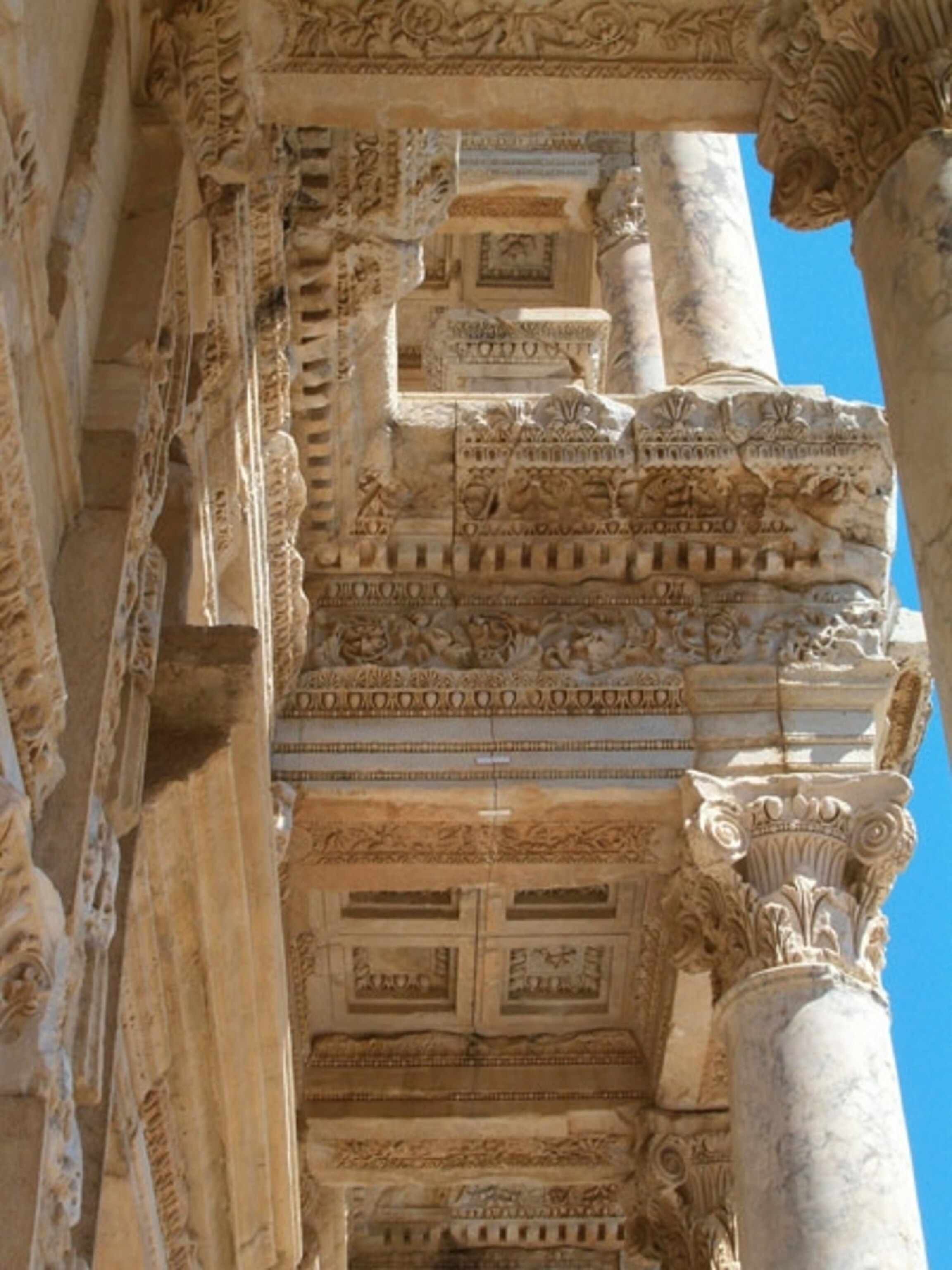
Library at Ephesus
Photograph by Didier De Pauw, My Shot
Most of the ruins of the great city of Ephesus are from its time as a Roman provincial capital. Evidence still stands, however, of its rule by the Greek and Persian empires more than 4,000 years ago. Situated near the Cayster River in western Turkey, the ancient city's most famous edifices include the Temple of Artemis and the Library of Celsus, shown here.
-
Hagia Sophia, Istanbul
Photograph by Murad Sezer/Associated Press
Built in just six years by Byzantine Emperor Justinian in the mid-sixth century A.D., Istanbul's Hagia Sophia stood as Christendom’s largest cathedral for almost a thousand years. After the city fell to the Ottoman Turks in 1453, it was converted to a mosque and outfitted with four slender minarets. In 1935, with the advent of the modern Turkish state, it became a museum.
-
Turkish Carpets
Photograph by Palani Mohan
Haggling over carpets is an age-old pastime at the legendary Grand Bazaar in Istanbul, Turkey. Rug weaving arose in Central Asia more than 2,000 years ago, and Turkish tribes were among its first practitioners. Centuries of refinements to please Ottoman rulers helped them hone their craft. Turkish weavers still produce the world's most coveted handmade rugs.
-
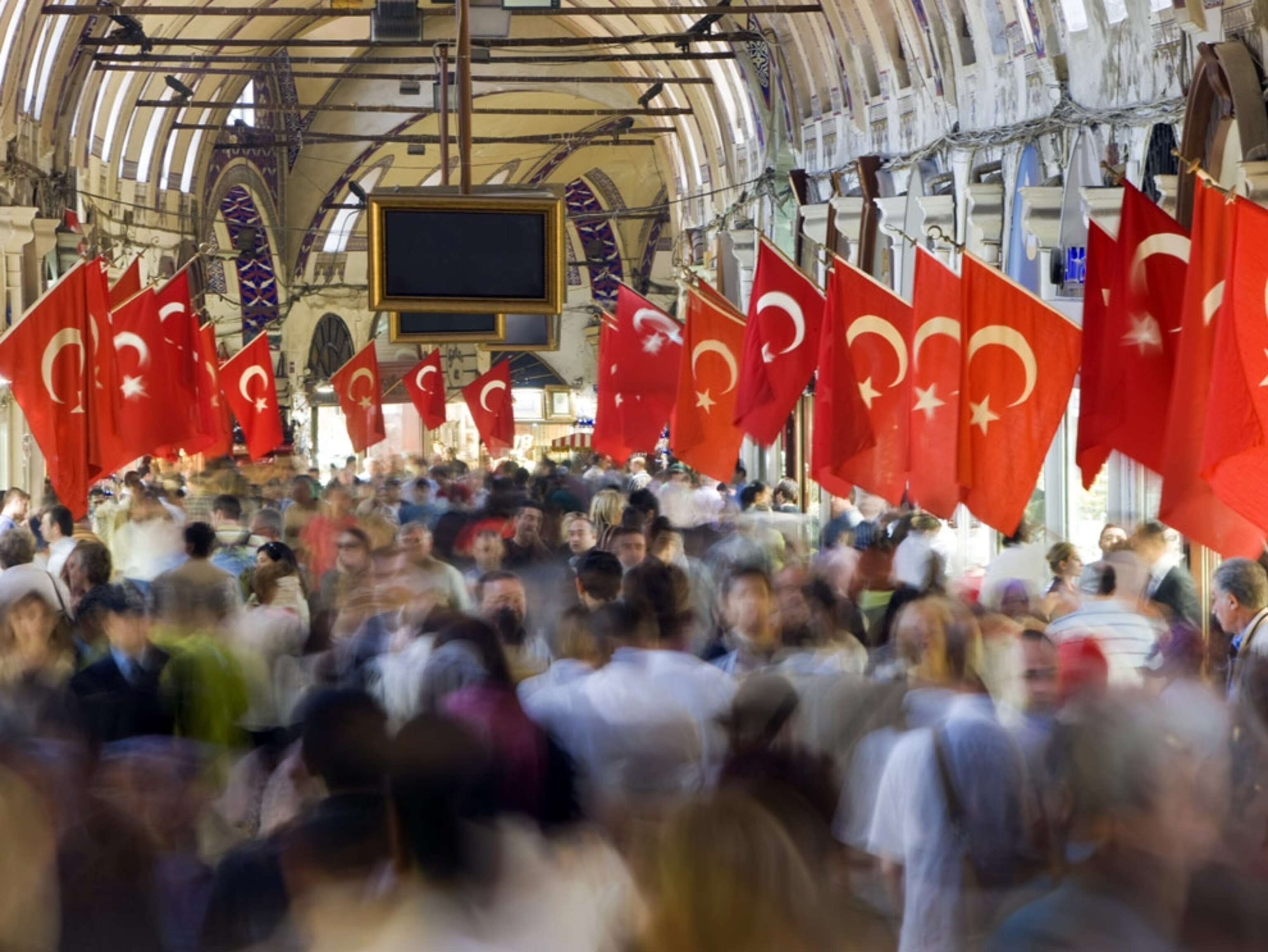
Grand Bazaar, Istanbul
Photograph by Gavin Hellier/Getty Images
The Grand Bazaar in Istanbul, Turkey, has been a blur of activity for more than 500 years. Built by Mehmet the Conqueror in the 1460s as the last stop on the Silk Road, this maze of stone and marble is one of the world's first and, despite the advent of the megamall, still among the world's largest covered markets. It occupies 75 acres (31 hectares) and houses more than 3,000 shops
-
Cave House, Cappadocia
Photograph by Apurva Madia, My Shot
What is now Cappadocia in central Turkey was once buried beneath a deep blanket of volcanic ash. Millions of years of wind and water erosion then sculpted the soft rock into forests of mushroom-shaped peaks, dubbed "fairy chimneys." For more than a thousand years people have dug them out and converted them into houses, churches, and even subterranean labyrinths where residents hid from invading armies.
-
Cappadocia
Photograph by Marge Botten, My Shot
Until quite recently, the famed cave dwellings of Cappadocia stood empty and the region attracted only adventurous tourists. But infrastructure improvements and posh accommodations, including new and refurbished cave homes, have turned it into a luxury tourism destination. Among the diversions available: hot-air ballooning over Cappadocia's breathtaking landscape of volcanic spires and fruit orchards.
-
Oludeniz Beach
Photograph by Gjoko Pargo, My Shot
Oludeniz Beach on the Turkish Mediterranean is famous for its wide shoreline, deep blue water, and gentle surf—its name means "calm sea." Constant breezes and steep cliffs rimming this secluded cove make it a destination for paragliders.
-
Galata Bridge, Istanbul
Photograph by Wilfried Krecichwost/Getty Images
The first bridge across Istanbul's Golden Horn waterway was a temporary structure erected by the Ottoman army in 1453. It wasn't until the late 1830s, though, that a permanent bridge was built. The current span, connecting the modern Galata neighborhood with Old Istanbul, is the bridge's fifth incarnation. Built in 1992, it houses shops, restaurants, and coffee houses underneath the roadway.
Shop National Geographic
Top Picks for Travel
- Enter Now! Traveler Photo Contest
- NEW! Best of the World Weekly
- Call for Nominations: Travelers of the Year
- How to Become a Nat Geo Photographer
- Top 10 Islands
- Don George's #TripLit Pick for June
- Download City Guides App
- Photos: Galicia, Spain
- Photo Gallery: World's Best Ecolodges
- Tips for Traveling Couples
Advertisement
Our Trips
2013 Traveler Photo Contest
-
Share Your Best Travel Photos
Enter to be featured in our weekly galleries and win a grand prize trip to the Galápagos.