-
Overhanging Rock
Photograph courtesy of National Archives
A well-dressed man overlooks Yosemite Valley, Half Dome, and the Sierra Nevada mountains from Overhanging Rock, which is at the edge of Glacier Point.
-
Hiking Half Dome
Photograph by Dean Conger
"Test for brawn and breath, Half Dome's 45-degree back-side trail evokes the vim of youth and the caution of increasing years."
—Originally published in "The Other Yosemite" in National Geographic magazine, June 1974
-
Family Portrait
Photograph by Dr. Gilbert H. Grosvenor
Family members perch on a rock over Mirror Lake during Dr. Gilbert H. Grosvenor's western United States trip of 1915. -
Mariposa Grove
Photograph by B. Anthony Stewart
In the Mariposa Grove of giant sequoia trees, a ranger lectures to a group of visitors outside of Mariposa Grove Museum, a replica of the cabin built in 1875 by Galen Clark (photo ca. 1960). -
Yosemite in the 1800s
Photograph by William Henry Jackson
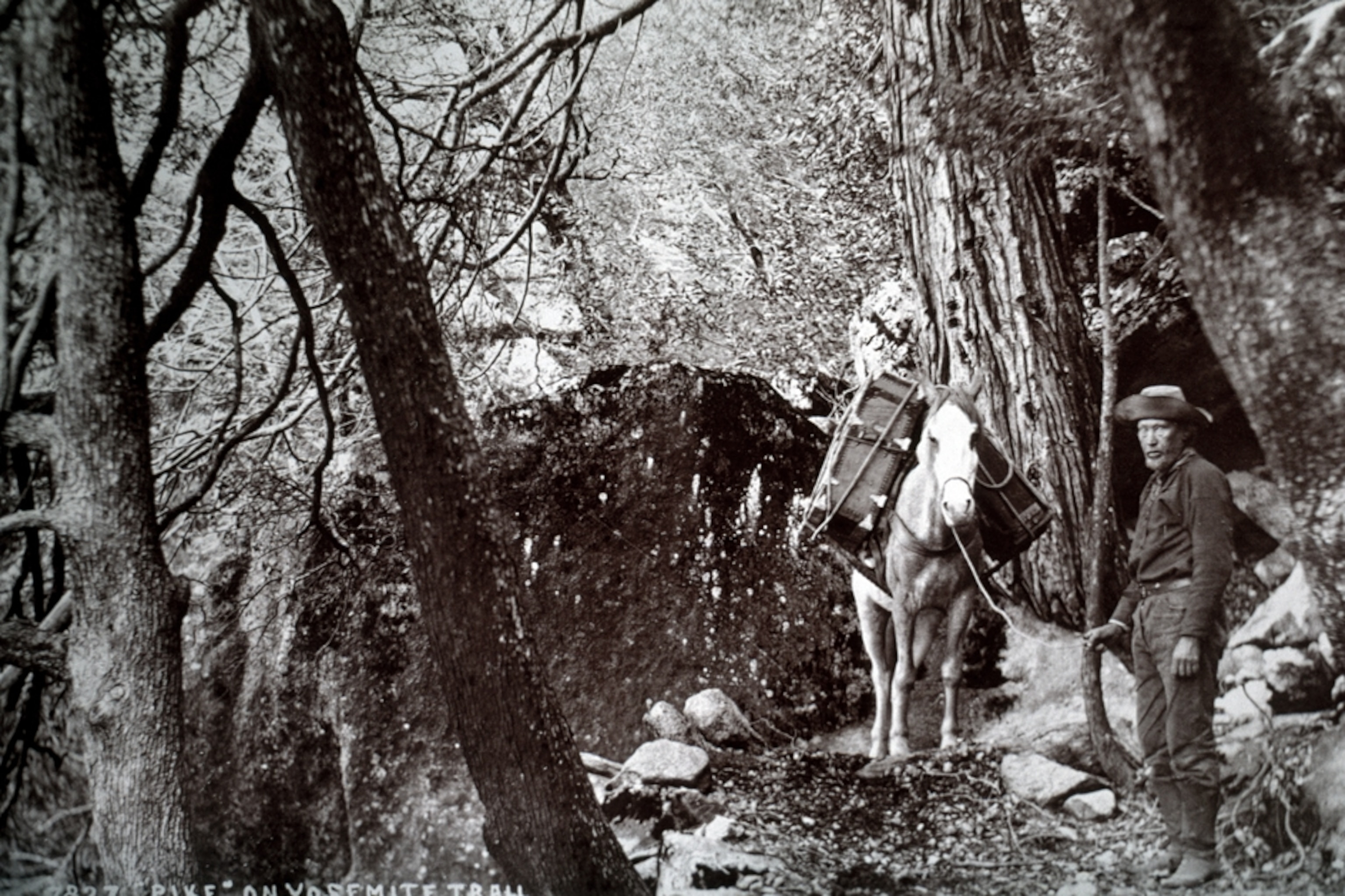
This original William Henry Jackson photograph from the Colorado Historical Society collection shows what life was like in the early days of Yosemite. Original caption reads: "'Pike' on Yosemite Trail." (ca. 1870-1878) -
Yosemite at Night
Photograph by Dean Conger
"Wheeling stars, a jet's winking light, and snaking cars write their signatures on Yosemite's night in this time exposure. A lone lantern's gleam on El Capitan's face marks a climber's dizzy berth, one day up from the valley."
—Originally published in "The Other Yosemite," National Geographic magazine, June 1974
-
Kids Camping
Photograph by B. Anthony Stewart
"'Camp out,' advised naturalist John Muir, and 'cares will drop off like autumn leaves.' Shepherded by their leader, these junior woodsmen carry their sleeping bags back to Yosemite Valley after an overnight stay above Nevada Fall."
—Originally published in "Today in Our National Parks: The Mission Called 66," National Geographic magazine, July 1966.
-
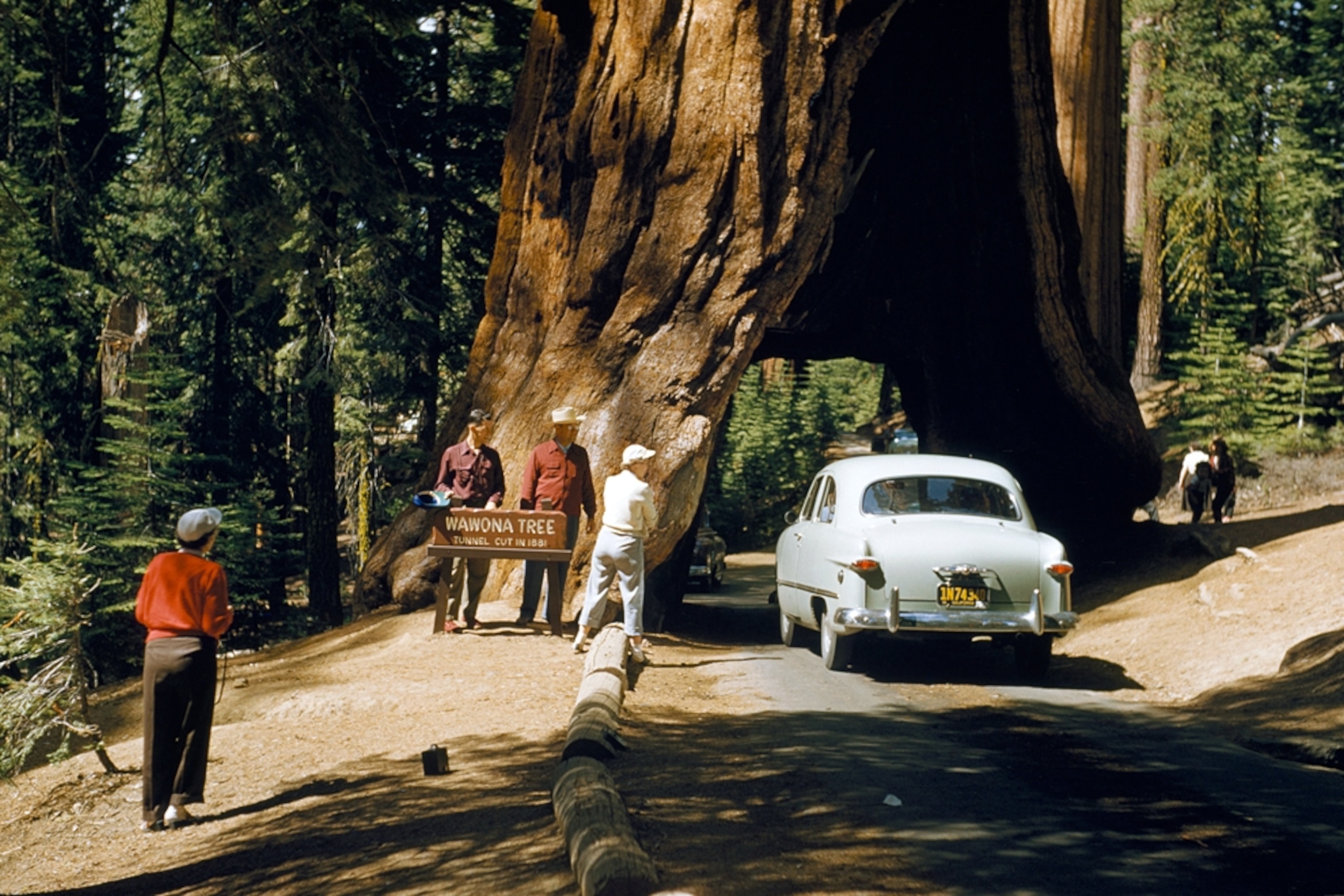
Wawona Tree Tunnel
Photograph by Melville B. Grosvenor
"Cut in 1881 for horse-drawn stagecoaches, the Wawona Tree tunnel has been pictured in schoolbooks for three generations. This giant sequoia continues to grow despite its enormous cavity."
—Originally published in "New Rush to Golden California," National Geographic magazine, June 1954
The tree stopped growing 15 years later (see next slide for details).
-
Wawona Tunnel Tree
Photograph courtesy of the U.S. Department of the Interior
"One of America's earliest national parks, Yosemite shelters from the logger's ax the towering sequoias that conservationist John Muir called 'kings of their race.' In 1903 President Theodore Roosevelt, standing in a stage [pictured], asked Muir to lead this group of officials. The Wawona Tunnel Tree, carved out in 1881 to attract visitors, withstood 2,200 winters before falling to a storm in 1969. Roosevelt enlarged Yosemite to include its famous valley and established five new parks, 18 monuments, and 148 million acres of forest reserves."
—Originally published in "A Long History of New Beginnings," National Geographic magazine, July 1979
-
Family Picnic
Photograph by B. Anthony Stewart
"Guitar music enlivens another group's chore of cleaning up after a meal cooked among the tall trees."
—Originally published in "Today in Our National Parks: The Mission Called 66," National Geographic magazine, July 1966
-
Valley Lights
Photograph by Jonathon Blair
"Campfire smoke hangs like mist in crowded Yosemite Valley, where throngs wait to view the evening firefall [a Yosemite tradition that ended in 1968] from Glacier Point. In this time exposure from 3,250 feet above the valley floor, a trail of flashbulbs traces the path of a photographer as he strolls in a loop at right center.
"Automobile lights streak roads leading from Yosemite Village [at top left], across from the curling Merced River, to the parking lot at Camp Curry. Royal Arches etch the beetling canyon wall.
"To disperse summer crowds, Mission 66 [a ten-year program of the National Park Service for the improvement and expansion of national parks] built 1,000 campsites outside the valley."
—Originally in "Today in Our National Parks: The Mission Called 66," National Geographic magazine, July 1966
-
Yosemite Tourists
Photograph by Melville B. Grosvenor
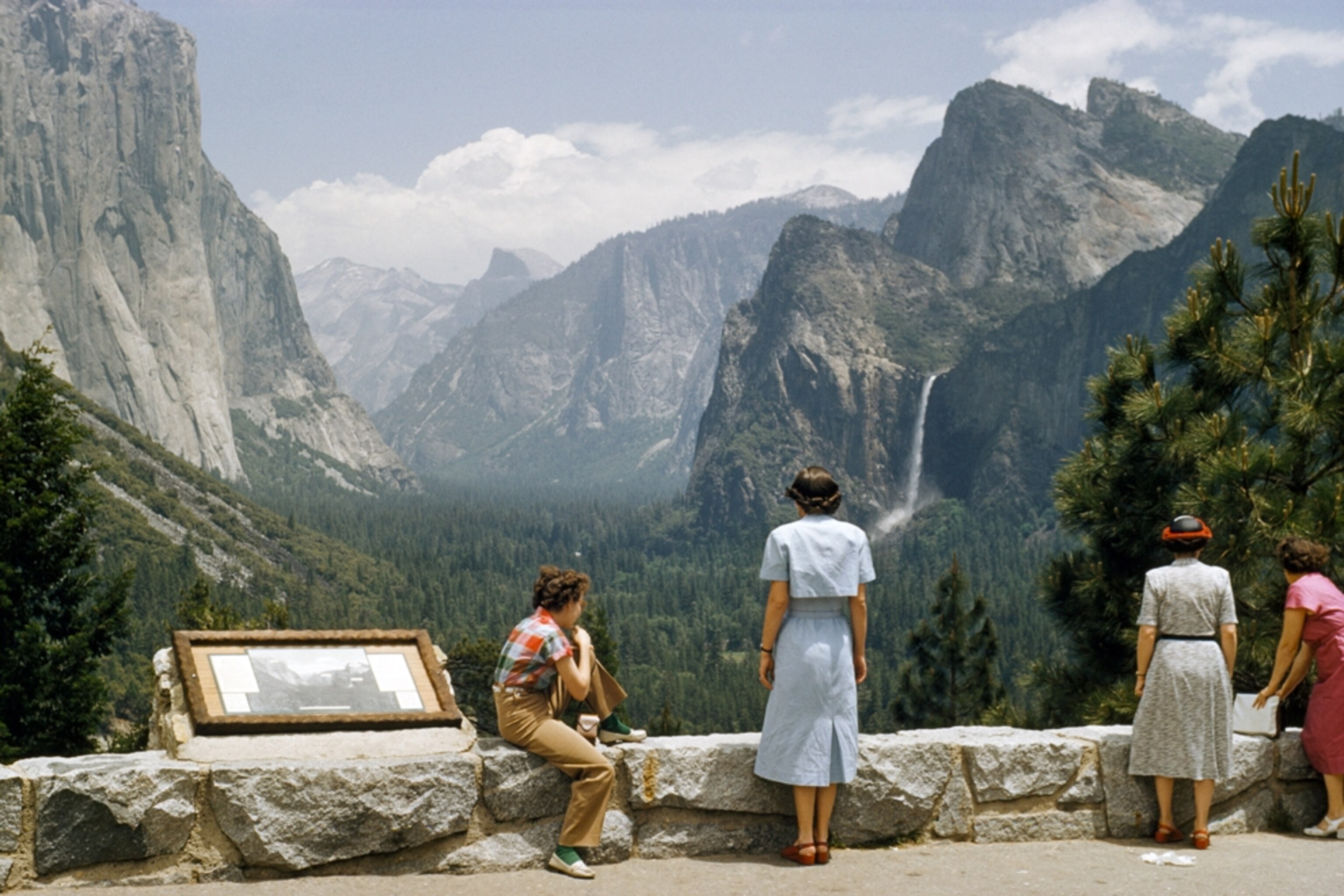
Majestic El Capitan (left) contains enough granite to make three Gibraltars. Clouds Rest peak and Half Dome fill the distant skyline. These visitors motored to the overlook through Wawona Tunnel, cut behind Pulpit Rock.
"The cataract wears a triple crown of peaks known as Cathedral Rocks. Its sparkling waters feed the Merced River. Erosive glacial ice, filling a mountain ravine to its brim, shaped the valley and polished its granite monoliths."
—Originally published over a two-page spread in "New Rush to Golden California," National Geographic magazine, June 1954
-
Horsemen
Photograph by Dean Conger
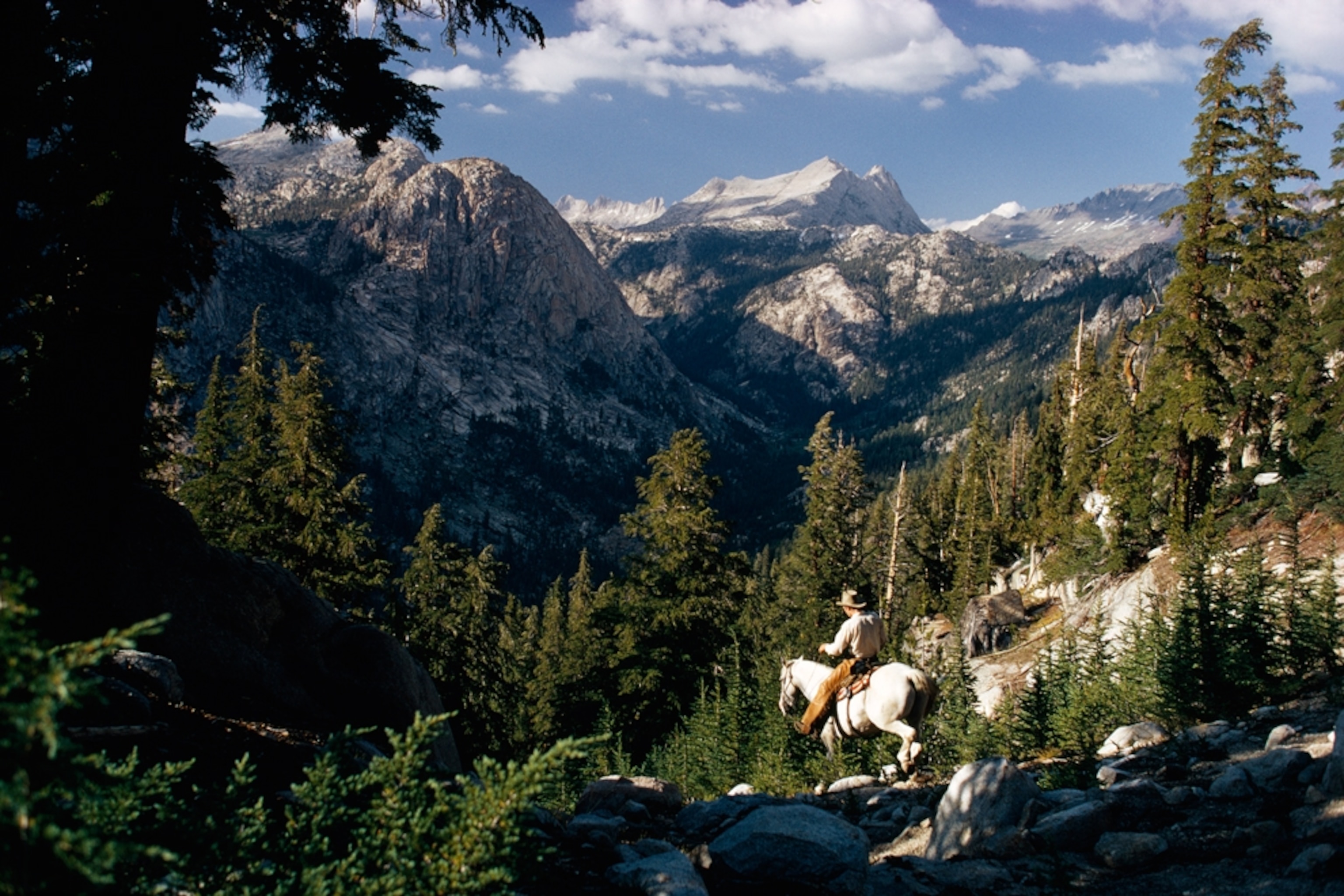
"Yosemite's many mansions range from 2,000 feet to more than 13,000 feet high on a Rhode Island-size wedge of the Sierra Nevada's west slope. Here, against a backdrop of the High Sierra, packer Sam Livermore enters cool-shadowed Matterhorn Canyon, a two-day ride from the nearest road."
—Originally published in "The Other Yosemite," National Geographic magazine, June 1974.
-
Sleeping Campers
Photograph by David Alan Harvey
"Sacked out after an all-night drive, two men hold their place in a two-mile line for campsites at Yosemite National Park, where chronic overcrowding has led to a new reservation system."
—Originally published in "Will Success Spoil Our Parks?" National Geographic magazine, July 1979
"According to the Economist, "the number of visitors to national parks and historic sites peaked in 1987."
Shop National Geographic
Advertisement
Our Trips
2013 Traveler Photo Contest
-
Share Your Best Travel Photos
Enter to be featured in our weekly galleries and win a grand prize trip to the Galápagos.