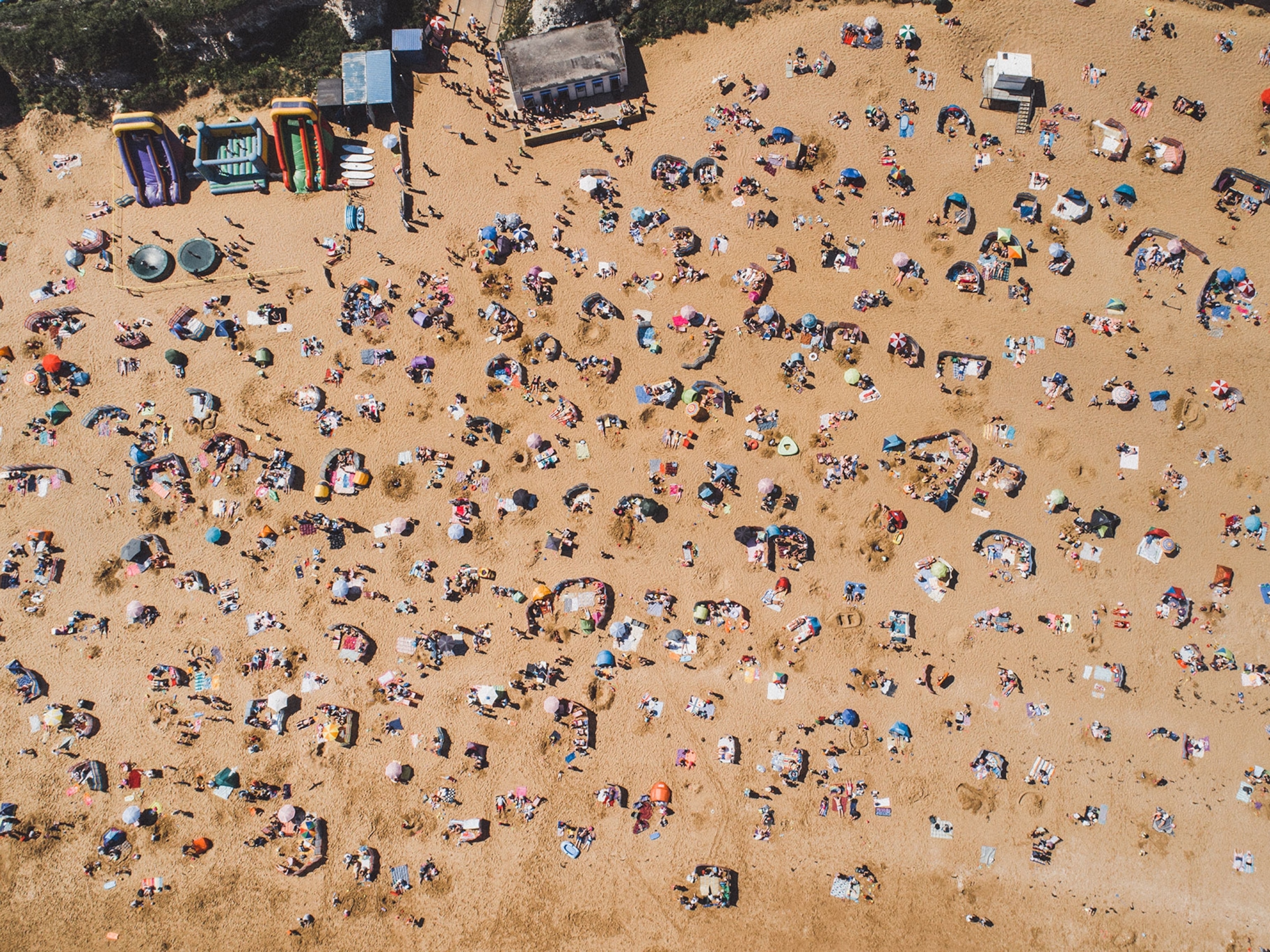
Our digital explorer, Andrew Evans, has just finished a two-month adventure in Australia, dropping us clues each day to help us follow him. Look back through the clues and see if you can guess the locations. And don't forget to follow him on Twitter to stay up to date on his upcoming adventures.
-
January 31, 2011
Photograph by Andrew Evans, National Geographic
Thank you all for being such terrific sports. Today's clue is the last one in our Australia game, and the first person to answer correctly in the comments below will win a DVD set of the Complete National Geographic, which includes every issue of our magazine from the last 120 years.
Here's the final clue: An island oasis, far out at sea; my face in the wind, my back in the lee. No cell phones ringing, only birds singing; this island was perfect for me!
Congrats to @Shanabd for being the first to guess the correct answer: Lord Howe Island, New South Wales; Southeast; 4. Send me a direct message on Twitter with your address, and I'll mail you the prize!
-
January 28, 2011
Photograph by Andrew Evans, National Geographic
The weather in Sydney is funny: you wake up one day and it’s sunny; then comes the wind, with the clouds rolling in. The 35th floor sees no money.
Where am I (city), and where am I standing to take this picture (which building)?
Congrats to @Ladydizzy for guessing the correct answer: Sydney, Australia; on top of the Sydney Marriot Hotel (36th floor rooftop).
Australia's biggest city is a mass of towers and skyscrapers. Wanting to capture the city's vertical element, I climbed as high as I could get, which was the rooftop of the Sydney Harbor Marriot Hotel at Circular Quay. At 36 stories, it's actually quite short compared to some of the CBD's larger buildings.
-
January 27, 2011
Photograph by Andrew Evans, National Geographic
A day at the beach—I felt just fine. I wandered the city and came to this sign.
Where am I (city, state), and which (single) street am I standing on for this shot?
Congrats to @johansondw for guessing the correct answer: Sydney, New South Wales, standing on William Street in Darlinghurst.
The Coca-Cola sign in Darlinghurst is a well-known Sydney landmark that’s been around since 1974. A meeting spot and now a tourist attraction, the lights blink on and off in different patterns.
-
January 26, 2011
Photograph by Andrew Evans, National Geographic
Happy Australia Day!
On Australia’s birthday, the streets were jam packed with people and history that go way back. I saw this cool car, and though it looked olden, I quickly discovered its past is quite golden.
Where am I (street, city, and state) and what car is this (make, model, and year)? And for the super sleuths out there, how many of these cars were built?
Looks like most of you knew the right location and make of the car, but no one managed to guess the year of this particular model. Here's the full answer: Macquarie Street, Sydney, New South Wales; Holden FX 1952; 102,402 built.
Australia Day was so much fun—as part of the festivities, restored automobiles were parked up and down Macquarie Street, offering great insight into the history of Australian cars. Owned by General Motors, the Holden is still the quintessential Australian brand of cars. This Holden FX (1952) was pulling a vintage trailer built from a kit back in the 1950s and was officially the first car mass-produced in Australia. When this car came out in 1952, it cost $1,470. -
January 25, 2011
Photograph by Andrew Evans, National Geographic
The river runs so low during The Dry, but during The Wet, it runs quite high. This sandstone cliff looks just like any other, but it was made famous for the country’s first film in color.
Where am I (place)? What movie was filmed at this spot, and who was the lead actress in that movie?
Congrats to @maya12345 for guessing the correct answer: Katherine Gorge, Katherine, Northern Territory; Jedda (1955); Rosalie (Ngarla) Kunoth.
The Katherine River cuts through 13 separate gorges made of these sheer red, black, and white sandstone walls. This particularly dramatic stone face was the backdrop for the famous death leap depicted in Australia’s first color film, Jedda by Charles Chauvel. Jedda was also the first film to make use of Aboriginal actors and remains somewhat controversial today. The original scene was shot right at this cliff, but had to be reshot in Australia’s Blue Mountains after the final reel was destroyed in a plane crash.
-
January 24, 2011
Photograph by Andrew Evans, National Geographic
From my seat on The Ghan, all I saw was this sand. Though in the rain (it’s said) this river runs red. I felt the train make a slight bend here—the closest I’ve come to Australia’s dead center.
Where am I (which state or territory)? What is the name of this river, and what desert does it flow into?
Congrats to @kennyg for guessing the correct answer: (Northern Territory), Finke River, Simpson Desert.
Traveling by train across Australia’s red center is an extraordinary experience. In the height of the day—with temperatures nearing 104 degrees Fahrenheit, I poked my head out the window for a glimpse of the Finke River. Less than a month ago, this “major” river was filled with water—now only a few waterholes remain. The rest is just pink sand with plenty of camel and kangaroo tracks. This river is interesting in that it has no outlet to the sea—it begins and ends in the desert. In all my travels so far, this is the closest I’ve come to Australia’s geographical center (S 25° 36.607 E 134° 21.288).
-
January 21, 2011
Photograph by Andrew Evans, National Geographic
Riding the rails to a land that needs fixing, where the sun shines so brightly, the heat was quite vexing.
Where am I (town and state), what are these two buildings (left and right), and what two minerals inspired the street names on this corner?
Congrats to @ladydizzy for being the first to guess the correct answer: Broken Hill, New South Wales; Post Office (Left) Town Hall (Right); Silver (Argent Street) and Chloride.
The Indian Pacific railway made a one hour stop in Broken Hill, New South Wales, where the earth was extremely dry and blazing hot—just hitting below 100 degrees Fahrenheit. The historical mining town shows off a colorful display of old buildings, like these two here. The old town hall façade (right) was originally built as a fire station and the tower used as a lookout for any fires in the area.
-
January 20, 2011
Photograph by Andrew Evans, National Geographic
Summer in Australia, and all the kids were out leaping on a beach in a town named for a place in Great Britain.
Where am I (beach and town’s common name), and what athletic event will take place here in the upcoming week?
Congrats to @kevinhanson for being the first to guess the correct answer: Henley Jetty, Henley Beach, South Australia; next week is the Jetty to Jetty Australia Day Long Swim (Henley-Grange).
Yesterday, I went swimming both at Glenelg and Henley beaches, in the Adelaide suburbs. Despite a number of signs saying, “No Jumping” there were hundreds of daredevil stunts being performed off of this jetty at Henley. For almost a century, the Henley and Grange Swimming Club (Australia’s oldest competitive swim club) has held a long distance jetty-to-jetty swim on Australia Day (January 26th), starting at this jetty in Henley and going all the way to Grange jetty.
-
January 19, 2011
Photograph by Andrew Evans, National Geographic
Packed up in wood, art can travel, too. In the late 1800s, this statue was brand new.
Where am I (location and city), and what’s the name of this sculpture and artist who created it?
Congrats to @mayainoz for guessing the correct answer: Art Gallery of South Australia, Adelaide, South Australia. The statue is “Daphne” by sculptor Marshall Wood.
I stepped inside Adelaide’s largest art gallery and was utterly enchanted by the huge collection of Australian and European art. Their Desert Country exhibit features an outstanding collection aboriginal art from Central Australia and will be touring around the whole of Australia up through 2012. During my visit, I heard the sound of electric drills and turned a corner where I snapped this man building a crate for “Daphne”. “She’s going into storage,” he explained. Sculptor Marshall Wood was originally from England and his work is still evident throughout the former British Empire. He traveled to Australia in 1880 and sculpted “Daphne” of white marble in 1882.
-
January 18, 2011
Photograph by Andrew Evans, National Geographic
By popular Twitter demand, here's a wine clue for today.
The name of this grape is different down under, and its ancient history still causes wonder. From an estate that was founded in 1890 (best in the country says the IWSC), this wine celebrates their anniversary. A limited label, for here and now, quite similar to their Qomolangma. You might be asking, “Well then, what’s to it?” Plum, chocolate, mocha, and blackberry fruit.
Where am I (town, state), what wine is this (including estate, label, year). And if you think you’re really good, name the only three fields from which this bottle of wine is produced.
Looks like the wine stumped everyone. A lot of you got the location right: Tanunda, South Australia, some were able to guess that it was a Shiraz, and a few of you even named the three fields of Bethany, Vine Vale, and Seppeltsfield. But alas, no one named the specific wine: Chateau Tanunda Old Vine Barossa Shiraz 2009. Cheers to everyone for a great round of guesses though.
Silesian immigrants brought winemaking to the Barossa Valley. I rode my bike through the area as part of the festivities going on during the Tour Down Under. I stopped at Chateau Tanunda for a look and was amazed by their exotic gardens, ornate brick chateau and diversity of wines. Only after visiting did I find out that they won Best Producer of Wines in Australia in 2010 from the IWSC. Their limited 120th Anniversary Shiraz mirrors their award-winning “Everest” Shiraz wines.
-
January 17, 2011
Photography by Andrew Evans, National Geographic
More than 2,000 miles end to end, on a train across the continent. We stopped at night to see this hole, that even now is filled with gold.
Where am I (place & town)? And on an average 12-hour shift, how many loads of ore does a single truck driver deliver to the surface?Congrats to @mayainoz for being the first to guess the correct answer: the Super Pit, Kalgoorlie, Western Australia, 18 loads.
-
January 14, 2011
Photograph by Andrew Evans, National Geographic
I left the top end and flew myself west, out to a place where the weather is best. Here the sun shines eight hours a day, and on Friday, this park is the place to play.
Where am I (city and state), and what was the name of this park prior to 1901?
Congrats to @nataliecola for being the first to guess the correct answer: Perth, Western Australia; The Perth Park. As promised, I'll be sending her my outback leather hat as a prize.
I arrived in Western Australia and immediately fell in love with the weather here. Warm, dry, and breezy, I went for a walk up to Kings Park and a view of this west coast city. This land was originally designated “The Perth Park” in 1895 but changed to “Kings Park” after Edward VII became King of England in 1901. Perth averages 8 hours of sunshine a day, making it one of the sunniest cities in the world.
-
January 13, 2011
Photograph by Andrew Evans, National Geographic
For some who pass, it’s just a rock, but others will recognize Namondjok. Long ago, when rains would come, the Warramal hid here from Namarrgon.
Where am I (rock art site and national park), who is Namarrgon, and where did he put his eye?
Congrats to @kevinhanson for guessing the correct answer: Anbangbang (rock art gallery) Kakadu National Park. Namarrgon is the Lightning Man, and his eye rests atop the cliffs at Namarrgondjahdjam.
-
January 12, 2011
Photograph by Andrew Evans, National Geographic
They hide real well, these salty guys, but it’s not a log if he blinks his eyes. During The Wet, the water turns muddy—if you go for a swim, then you’re just plain nutty.
Where am I (National Park and closest “town”)? Which billabong is this and about how many wild estuarine (saltwater) crocodiles are left in Northern Territory today?
Congrats to @kevinhanson for guessing the correct answer: Kakadu National Park, Cooinda, Yellow Water Billabong, 70,000 crocodiles.
Although I’ve already seen dozens of crocodiles in Australian zoos, this guy was the very first croc that I saw in the wild, resting in Yellow Water billabong, near Cooinda, Kakadu National Park. He was a good size, about 9 feet (3 meters) long. At one point, he slipped completely under the water except for his nostrils. Saltwater crocodiles are protected in Australia. There are an estimated 100,000-200,000 saltwater crocodiles in Australia, of which 70,000 are believed to live in Northern Territory.
-
January 11, 2011
Photograph by Andrew Evans, National Geographic
“Everywhere to the northwards ... were dotted 'white-ant' hills, all shapes and sizes, forming brick-red turrets among the green scrub and timber.”
Where am I, and who wrote these words? Give the name of the author's home and the closest town. Also, what are the “white-ants” she was describing?
Congrats to @kevinhanson for guessing the correct answer: Elsey Station, Mataranka, Northern Territory; Jeanie “Mrs. Aeneas” Gunn; termites.
I loved traveling across the bright green landscapes that mark the transition from Australia’s outback to the tropical “top end”. During “The Wet” or summer rainy season, the grass almost glows green making the red termite mounds even more pronounced. This harsh but beautiful land was immortalized in the book "We of the Never-Never", by Jeanie Gunn (the "Never-Never" is the local aboriginal term for this harsh tropical bushland). More than a century after her own experience as a settler in Northern Territory, her description of “the Never-Never” is dead on. As I took this picture, some of the termite mounds bounded away—red kangaroos that blended right into the scene. (Quote taken from "We of the Never-Never" by Jeanie Gunn, page 51).
-
January 10, 2011
Photograph by Andrew Evans, National Geographic
Leaving Alice, I headed north, where army convoys once sallied forth. Helen pulled me a cold drink from the fridge, in this pub built the same year as the Sydney Harbor Bridge. Back home, we’d happily call it a dive, but in Oz it’s a town with a population of five.
Where am I (town and pub)? Which explorer gave it its name, and (for extra, extra credit), which Australian Army division is represented by the gold and green kangaroo emblem on the wall?
Congrats to @kevinhanson for guessing the correct answer: Barrow Creek, John McDouall Stuart, Australian Army Training Division.
While driving the Stuart highway, I stopped for fuel at Barrow Creek, amazed by the town’s utter remoteness in the midst of the outback. Like any smart explorer, John McDouall Stuart paid tribute to a man with money, the Treasurer of South Australia, John Barrow. A bush telegraph station was built here in 1872 that still stands today. Since World War II, army convoys crossing the center of Australia would stop in Barrows Creek. The pub (officially opened in 1932) now carries many of their division plates on the walls, including this kangaroo and swords emblem, for army divisions in training. Bartender Helen Jones (pictured) told me that normally the number of permanent residents at Barrow Creek was five, but two were on “holiday” so the town had dropped to just three that week.
-
January 7, 2011
Photograph by Andrew Evans, National Geographic
Old McDonald had a farm, EE-I-EE-I-O. And on that farm he had some wild horses, a few camels, and big, beefy bulls. Also, his farm was bigger than Long Island, New York.
Where am I (which “farm”), and what mountain range is this?
Congrats to @adeej for guessing the correct answer: Kings Creek Station, George Gill Range.
Kings Creek Station is 2,000 square kilometer cattle station in Central Australia, about 3 hours north of Uluru, near the renowned Kings Creek canyon. Spending time in such remote outback made me feel as if I had finally arrived at the real Australia.
-
January 6, 2011
Photograph by Andrew Evans, National Geographic
Ngangkali ilkaringka Ngararangi minatjara munu puyiningilta iilingku. After it dried, I went outside. I looked across the desert and saw “many heads.” Some were made of stone, others were laden with blossoms that are untanu-untanu.
Nganala?—Where am I? Yaalitja punu?—What kind of tree is this (common and/or Latin name)?
Extra hint: Today's clue uses phrases in Pitjantjatjara, the aboriginal language spoken where I am currently traveling.
Congrats to @sarahmdiment for guessing the correct location: Kata Tjuta (Northern Territory). Unfortunately, however, no one was able to guess the exact tree: black gidgee (Acacia pruinocarpa), a few close guesses, but no cigars.
-
January 5, 2011
Photograph by Andrew Evans, National Geographic
A thousand miles, I covered in a day, five hours by car and two on a plane. At sunset I came to this massive stone but quickly discovered I wasn’t alone.
Where am I? And which (specific) North American tribe gave us the geological term for this type of isolated rock formation? The first person to guess correctly gets a postcard from here.
Congrats to @llgablewvt for guessing the correct location first: Uluru (Ayers Rock), Uluru-Kata Tjuta National Park, Northern Territory, and for knowing the Abenaki tribe named the geological formation.
Watching Uluru loom in the distance was unforgettable. I traveled all day from Darwin just to arrive at sunset—a trip well over a thousand miles. I snapped this photo right as a parade of tourists began lining up at the sunset viewing area. The word “monadnock” is thought to come from the Abenaki tribe of the northeastern Americas. Uluru is defined as a monadnock or inselberg—an isolated mountain in the midst of a flat plain. -
January 4, 2011
Photograph by Andrew Evans, National Geographic
Australia has its unsung heroes, like those who dug holes untouched by zeros.
Where am I and what is this?
Congrats to @sdiment for guessing the correct answer:Darwin, Northern Territory, World War II oil storage tunnels.
At the “top end” of Australia and not far from Indonesia, Darwin was a primary target of the Japanese air force during World War II. The first and largest attack took place on February, 19th, 1942 and claimed the lives of hundreds of Australians. In preparation for future attacks, storage tunnels like this one were built to protect the local fuel supply. Ironically, the tunnels were never actually used. I took this picture of the tunnel’s back end by crawling into the old valve box.
-
January 3, 2011
Photograph by Andrew Evans, National Geographic
Pixels are merely tiny colored dots. In the same way, these panels cover a parking lot.
Where am I (corner of which two streets in which city), what is this (name), and how many panels comprise it in total?
Congrats to @_emy, who wins a box of Australian chocolates for guessing the correct answer: The Rundle Lantern, Corner of Rundle and Pulteney Streets, Adelaide, South Australia, 748 panels.
-
December 31, 2010
Photograph by Andrew Evans, National Geographic
All of you out there who’ve been reading my tweets, should already know the name of this reef. These fish had a name not so long ago, but now everybody just calls them “Nemo.”
Where am I (which reef), and which species of “Nemo” is this?
Congrats to @ladydizzy for guessing the correct answer: Thetford Reef (Great Barrier Reef) and Clown Anemonefish (Amphiprion ocellaris).
Diving the outer fringes of the Great Barrier Reef was mind-blowing for all of the wonderful aquatic life displayed. I saw three different species of "clownfish" but this one is probably the most commonly recognized.
-
December 30, 2010
Photograph by Andrew Evans, National Geographic
I sailed far away to the outer reefs and dove into the blue with one giant leap. Near the continental shelf, the diving gets better; this particular reef is spelled with five letters.
Where am I (specific reef) and what constellation is on my swimsuit?
Congrats to llgablewvt for guessing the correct location, Flynn Reef (Great Barrier Reef, Queensland), and for correctly guessing the Southern Cross as the constellation.
Given the massive size of the Great Barrier Reef, the opportunities to explore underwater are endless. Eager to see as much as I can, I am sailing on a live-aboard that takes scuba divers to the outer edges of the reef. The coral here is massive—deep canyons, ledges and walls that make you feel miniscule. I’ve completed 3 dives today and spent the interim time snorkeling, still amazed by the millions of fish.
-
December 29, 2010
Photograph by Andrew Evans, National Geographic
I sailed on a boat from Cairns to the reef, amazed by the colors alive in the deep. Flipping my fins, it felt rather chummy, to swim with the fish all ‘round the bommie.
Where am I (closest island) and what is a bommie?
Congrats to llgablewvt for guessing the correct location, Green Island (Queensland), and knowing that a bommie is the Australian term for a reef outcrop that sticks up into the shallows and derives from the aboriginal word “Bombora.”
Diving on the Great Barrier Reef was exquisite, especially for the vibrant corals that seem to go on forever. It took about an hour to reach the reef by sailboat, after which I spent nearly an hour underwater on my first dive. The coral reefs around Green Island are protected under the Great Barrier Reef Marine Park Authority, contributing to the huge number and diversity of fish living on coral outcroppings like this one.
-
December 28, 2010
Photograph by Andrew Evans, National Geographic
I walked through the treetops to arrive at this site, where the river tumbles and water bends light. I discovered in fact that these colors were a great and ancient ancestor.
Where am I (natural site, nearest town, state)? And what is the local aboriginal name of the great ancestor shown in the picture?
Congrats to Adeej for guessing the correct location, Barron Falls (or Din Din) in Kuranda, Queensland, though no one managed to get the second part of the answer: Gudju Gudju.
Following the floods we’ve been having in Queensland, I went to see the beautiful and overflowing falls in Barron Gorge National Park, part of Australia’s Wet Tropics World Heritage Site. The mountain rain forest is thick with tall trees, vines, bird life and bright butterflies. I photographed this rainbow right next to Barron Falls and only later learned about Gudju Gudju, the great ancestor of the Djabugay people who is manifest in the rainbow.
-
December 27, 2010
Photograph by Andrew Evans
Tropical rain cancelled my train; wanting sunlight, I boarded a flight.
Where am I (city and airport), what flight was I on, and where did I land?
Congrats to chippy2u and thelighthorse for guessing the correct answer: Brisbane Airport (BNE) Flight QF784 to Cairns.
Cyclone Tasha made Christmas rather dramatic and flooded several of the roads along the tropical Queensland coast. I had hoped to travel overland—by train—but ended up hopping this flight to Cairns, where the weather is always warm.
-
December 24, 2010
Photograph by Andrew Evans
The night before Christmas and instead of a mouse, I saw this huge cow that’s as big as a house. Nearby trees were loaded with fruit, and the closest town is renowned for a root.
Where am I (closest town and state), what road is this on, and what breed of cow does this giant represent?
Congrats to Adeej for guessing the correct answer and for winning the adoption of Ozzie, the baby Tasmanian devil: Yandina, Queensland, Ayrshire Road, Ayshire.
The Big Cow is a local landmark in Southeastern Queensland, the remnant of an old roadside milkshake stand. The breed is Ayshire, just like Ayrshire Road on which the cow stands. Nearby Yandina is home to the Buderim Ginger Factory. (http://www.buderimginger.com/gingerfactory)
Look at the next image in the gallery for yesterday's clue.
-
December 23, 2010
Photograph by Andrew Evans
A breathtaking land, even in the rain. Like something you’d see in a picture frame. Formed long ago from a giant explosion; aboriginal tales say that they're children.
Where am I (mountain range and state) and what is the native name and English nickname for the two mountains in the middle?
Congrats to Adeej for guessing the correct answer: Glass House Mountains, Queensland, Mount Tunbubudla or "The Twins."
I was driven north of the Glass House Mountains on the back of a motorcycle. Thick mist surrounded the countryside, creating this fairy-tale view across the valley. The mountains comprise 16 volcanic "necks"—the remaining mineral plugs of ancient volcanoes that have eroded away long ago. Aboriginal legend describes the lower mountains as children of the taller two mother and father mountains. Coincidentally, the impressive landscape inspires many people to build actual glass houses to better enjoy the view.
-
December 22, 2010
Photograph by Andrew Evans
Like two ships passing in the day—twin sisters some might say—the other sailing the opposite way—but only one of us headed toward the bay.
Where am I (body of water), what ship am I on (in order to take this picture), and what side of the ship am I standing on?
Congrats to Adeej for guessing the correct answer: Bass Strait, Spirit of Tasmania II, port side.
The Spirit of Tasmania I and II are sister ships that connect Tasmania to the mainland of Australia. They typically sail overnight but in high travel seasons (like right now), they do double crossings during the day, meaning the two ships pass each other right in the middle of the Bass Strait. The journey takes about nine hours and fortunately for me, the sea was very calm and peaceful. To take this picture, I was sailing north to Melbourne (via Port Phillip Bay) on Spirit of Tasmania II, standing on the port side, while the Spirit of Tasmania I sailed south on its way to Tasmania.
-
December 21, 2010
Photograph by Andrew Evans, National Geographic
This five-lettered village began as a farm, though today’s farmers might sooner raise an alarm. Security around here is extra tight: The police even patrol the flowers at night.
Where am I (which village), what type of flower is this, and which Greek deity lends its name to the final product of this crop?
Congrats to Kevinhanson for guessing the correct answer: Forth, Tasmania; Opium Poppy (Papaver somniferum); Morpheus, the Greek god of dreams.
Forth is a small farming village of 350 inhabitants on Tasmania’s central coast, founded by Irishman James Fenton in 1839. As an isolated island with natural security and a temperate climate, Tasmania is ideal for growing opium poppies. The state currently produces 55 percent of the world’s opiates used for (legal) painkillers like morphine from an area of around 25,000 hectares (nearly 100 square miles). Often I remarked on the beauty of the flower fields while traveling in Tasmania, but soon learned that access to the fields is strictly forbidden.
-
December 20, 2010
Photograph by Andrew Evans, National Geographic
I finally saw wombats out in the wild—this cautious mother and her fur ball child. High-mountain forest lined both sides of the road, and the nearby lake is a lagoon, I'm told.
Where am I (which road, closest lake & state) and about how long does it take a wombat to digest its food?
Congrats to Kevinhanson for being the first to guess the correct answer: A10, Bronte Lagoon in Tasmania. It takes up to 14 days for a wombat to digest its food!
Bronte Lagoon is a man-made lake from the Hydro Tasmania energy project, high up in the center of the state, near the border of Franklin-Gordon Wild Rivers National Park. The wet wilderness area is rich with wildlife and driving at dusk, I saw this mother wombat and her young joey crossing the road. Although I stopped the car, the mother immediately covered her baby in protection.Wombats are fascinating animals with very slow metabolisms—hence the lengthy digestive process.
-
December 17, 2010
Photograph by Andrew Evans, National Geographic
I walked for two days to come to this shore, then took a dip ‘cuz my legs were so sore. Others had lived here long before, this beach belongs to aboriginal lore.
Where am I (location), who named it that, and (for you big brainiacs out there), what was the exact date that he gave it that name?
Congrats to Kevinhanson for being the first to guess the correct answer: Bay of Fires, Mount William National Park, Tasmania.
The Bay of Fires received its English name from Captain Cook’s second-in-command Tobias Furneaux of the HMS Adventure, who sailed along the coast of Tasmania in 1773. On March 17th of that year, he noticed the fires of the local aboriginal people along the coast and named the spot “Bay of Fires”. The name is also fitting for the bright orange-red lichen that covers the boulders along the coast. I hiked the full length of this spectacular coastline at Mount William National Park and was overwhelmed by the isolated beauty of this spot.
-
December 16, 2010
Photograph by Andrew Evans, National Geographic
Last night I stayed in this famous estate, built way back in 1838. Owned by the state's very first premier, these bells still work after 150 years!
Where am I (hotel and location) and what is a morning room?Congrats to llgablewvt for guessing the correct answer: Quamby Estate, 1145 Westwood Road, Hagley, Tasmania. A morning room is a kind of sitting room with lots of windows to allow inhabitants to sit in the daylight.
Quamby Estate was the private home of Tasmanian premier Sir Richard Dry, the first premier who was actually born in the state. Today it is a golf course and country club, as well as a beautiful hotel and restaurant. Popular in the Victorian era and across Britain's sunny colonies, a morning room usually featured east-facing windows and was used for daytime visits. -
December 15, 2010
Photograph by Andrew Evans, National Geographic
Elusive and shy during most of the day, to see one wild is rare, they say. But eager to find one anyway, I headed to their “capital” and saw these boys play.
Where am I (state and town) and which piece of Australian money bears this animal?
Congrats to Kevinhanson for being first to guess the correct answer: Platypus Interpretation Center, Latrobe, Tasmania.
Latrobe, Tasmania is the self-proclaimed Platypus Capital of the World, renowned for it’s ubiquitous (but still shy) platypuses that live in the surrounding ponds and streams. Yesterday, I went out looking for a platypus in the nearby Warrawee Forest Reserve and saw two, which is quite hard to do. The platypus—an egg-laying, duck-billed mammal—is on the back of Australia’s 20 cent coin.
-
December 14, 2010
Photograph by Andrew Evans, National Geographic
While an American queen holds court just outside, a more local majesty glues lashes to his eyes. It’s the one place in Oz that everyone should know, and this girl's stage name is a kind of cinnamon roll.
Where am I, and who is this?
Congrats to CindyB for guessing the correct answer: The Sydney Opera House, Sydney, New South Wales. The performer is Chelsea Bun.
I was lucky enough to meet Sydney drag queen Chelsea Bun in her dressing room at the Sydney Opera House and shot this picture of her nibbling a cookie a few minutes before the curtains went up for a special Christmas cabaret show. By day, Anthony Defina owns and manages the House of Priscilla, a famously flamboyant costume shop on Oxford Street. (A chelsea bun is a kind of Australian (and British) breakfast pastry—like a cinnamon roll with raisins and lots of glaze.)
-
December 13, 2010
Photograph by Andrew Evans, National Geographic
I hopped on a plane and headed due east. On the very next day, I met this fierce beast. His knife-sharp teeth flashed inches from my face, but nevertheless I felt perfectly safe. This city itself is actually quite famous, named after a man who’s first name was Thomas.
Where am I? (Location and city) and what is the Latin name for this species of fish?
There were a few close guesses, but no one managed to put together the whole answer: Great Barrier Reef Tank, Sydney Aquarium, Sydney, New South Wales. The fish is a gray reef shark, or Carcharhinus amblyrhynchos.
At 2.6 million litres (686,847 gallons), the Sydney Aquarium's Great Barrier Reef “Oceanarium” is the largest of its kind in the world, with fresh saltwater water pumped directly in from Sydney harbor. Several very large gray reef sharks inhabit the tank, which is one of the most common sharks found along Australia’s Great Barrier Reef. (I shot this image through 10 inches of clear glass.)
Australia’s largest city is Sydney, named after British noble Thomas Townshend who held the title First Viscount Sydney.
-
December 10, 2010
Photograph by Andrew Evans, National Geographic
This delicate white is pressed from a German grape and grown in Australia’s shallow terra rossa soil. Young, it’s got a nice lime and pear aroma. Let it age 5 or 6 years and some rich characters emerge: toast, butter, and lemon citrus. It recently won a gold medal at Australia’s boutique wine awards, which came as a surprise, since its maker is much better known for his Cabernet.
Where am I (region and estate), and what wine is this (label, name, and year)?
Congrats to Karinagw for being the first to give the correct answer in full: Patrick Estates, Coonawarra, South Australia; 2009 Patrick Estate Wrattonbully Riesling.
Patrick of Coonawarra is the only Riesling producer in the Wrattonbully district in South Australia’s Coonawarra region. Last year, the 2009 vintage won the gold medal and top of its class in the Australasian boutique wine awards. Alas, the wine is not exported, so you have to come to Oz to drink it. I just loved driving through the endless vineyards of South Australia—a marvelous landscape of neat green rows flowing over low hills.
-
December 9, 2010
Photograph by Andrew Evans, National Geographic
Is it a sport or is it an art? Nobody knows how to tell them apart. You ride the waves until you wipe out, unless your board is special somehow.
Where am I? And more importantly, whose board is this?
Congrats to Amphibianrescue for guessing the correct location: the Surf World Museum, Torquay, Victoria, and congrats to Cocofike for guessing the surfer: Mark Richards. This fluorescent orange twin fin surfboard was designed, built, and owned by professional Australian surfer Mark Richards, who used it to win the 1982 world surfing championship.
Torquay is considered to be Australia’s surf capital, home to the ultra-famous surfing spot Bells Beach. Mark Richards perfected the twin fin design to enhance performance on his surfboards and was also known for his use of bright color. This particular board was snapped in half while surfing in the movie “Wizards of the Water” but it was repaired and used again. -
December 8, 2010
Photograph by Andrew Evans, National Geographic
It was getting warm, so I headed for the hills, where the view and the air both gave me the chills. Steering this road kept me well on my toes, but in June and July, it’s all covered with snow.
Where was this photo taken?
Congrats to Willblowers for having the closest guess. This photo is from the Great Alpine Road (B500), Alpine National Park, Victoria
The Great Alpine Road is one of Australia’s great drives, winding through the Australian Alps along the perimeter of Victoria’s Alpine National Park. The mountain views are magnificent and the forest thick with birdlife. I was amazed by the abundant crimson rosellas—a bright native parrot—that hopped about freely in the trees. It was hard to imagine that in winter, this is a popular ski destination. -
December 7, 2010
Photograph by Andrew Evans, National Geographic
All that glitters is gold, unless it’s just dirt. What you need to know is on this guy’s shirt.
Where is this?
Congrats to lvcriminalminds for guessing the correct answer: Central Deborah Gold Mine, 76 Violet Street, Bendigo, Victoria
Bendigo represents one of the richest mines of the famous Victorian “Goldfields”. Gold was first discovered in 1851 and today, the mines at Bendigo still represent the 7th largest gold production in the world. I thought it would be fun to take a tour but when I arrived, the 2010 Australasian Goldpanning Championships were just wrapping up. The fastest panner is the overall winner and awarded the grand prize of a high-tech metal detector. Right after snapping this, the child in the photo found a small piece of gold.
-
December 6, 2010
Photograph by Andrew Evans, National Geographic
The point of the game is a small ball that wobbles, or is it simply the teatime that follows? But don’t mock the sport, because down here it’s hallowed. This new carpet green cost $200,000.
Where am I?
Congrats to @adeej for guessing the correct answer: Bowling green of Castlemaine Bowling Club, 17-21 Berkeley Street, Castlemaine, Victoria
Lawn bowls is a common sport played throughout Australia. Unlike boules or bocce, lawn bowls are asymmetrical and roll with a curved “bias”. I happened upon this afternoon game while driving through Castlemaine and stopped to observe. The club is very proud of their new green, which opened in May following a $200,000 renovation. The club members insisted I “have a go” and all had a hearty laugh watching my attempts (it’s harder than it looks).
-
December 3, 2010
Photograph by Andrew Evans, National Geographic
The pen is mightier than the gun ... sometimes.
Where am I?
Congrats to kevinhanson for guessing the correct answer: State Library of Victoria, 328 Swanston Street, Melbourne
The Jerelderie letter is perhaps the most famous document composed by Ned Kelly, Australia’s legendary outlaw. The bushranger’s manifesto is one of many unique treasures held by the State Library of Victoria and the original is still clearly legible today, 131 years after it was written. My photo shows page 43—where Ned recounts how he was wrongfully arrested for riding a stolen horse. Visitors to the library can see sections of the document along with Ned’s original suit of makeshift armor that he wore in his final shoot-out with the police at Glenrowan. Just around the block is the Old Melbourne Gaol where Ned was hanged in 1880.
-
December 2, 2010
Photograph by Andrew Evans
My favorite Australian band showed me around, taking me into the cool parts of town. A line from their song inscribed on a bench--or perhaps this time, it’s the other way round?
What street is this and who are these two guys?
Congrats to bookgrrl for getting the right answer: Brunswick Street in Melbourne, Victoria; Marty Donald and Louis Richter of The Lucksmiths.
Once a working-class suburb, Fitzroy represents Melbourne’s bohemian heartland and a unique live music scene. Public street art adorns the neighborhood, like this piece by local artist Bronwyn Snow. The bench inspired the song “Shine on Me” recorded on The Lucksmiths’ 1996 album, “What Bird is That?”
-
December 1, 2010
Photograph by Andrew Evans, National Geographic
Australia feels as far as the moon—when your sky gets dark, for me it's noon. My jetlagged head doesn't know the day but this face will celebrate his 98th.
Where am I? See the answer below.
Entrance gates to Luna Park, 18 Lower Esplanade, St. Kilda, Victoria. Opened in December 1912, Luna Park was modeled after New York’s Coney Island and built by American entrepreneur J.D. Williams—the same man who made Charlie Chaplin famous. Nearly a century later, its wooden roller coaster, blinking lights, and old-time funhouse atmosphere brighten the Melbourne suburb of St. Kilda.
Andrew's Most Popular Blog Posts
-
Mustering Brumbies
Rounding up wild horses, like everything else, is different in Australia, as Andrew learned first-hand at Kings Creek.
-
Happy Australia Day!
After traveling here for more than seven weeks, I have a much better sense of this remarkable country and its people. Still, that didn't prepare me for the jubilant celebrations that mark Australia Day.
-
Video: The Colors of Uluru
Visiting a world famous icon always carries high expectations, while true travel always offers an extra element of surprise. Australia's Uluru didn't disappoint.
-
Way Out Woop Woop
Most of Australia is gloriously empty. Perhaps that's why I love it so much here.
-
The People and the Rock
Hundreds of Aboriginal languages are still spoken in Australia today. Here, Andrew says "thank you" in Pitjantjatjara, a language spoken by only 4,000 people.
-
Cute Cuddly Sharks
Sharks can be found throughout Australia's waters, and our digital nomad Andrew Evans gets up close and personal with a few.
-
Diving the Great Barrier Reef
Diving in the Great Barrier Reef was a lifelong dream for Andrew Evans. The abundance of life was unlike anything he'd ever seen.
-
The Bay of Fires
Andrew Evans wanders the coastline of Tasmania's Bay of Fires, and stays at an eco-friendly hideaway that blends in with the gorgeous landscape.
-
Christmas in Paradise
Andrew Evans spends the holidays on Fraser Island in Australia, wishing it was a picture perfect as a postcard.
-
Video: Tasmanian Devils
Andrew Evans visits a sanctuary to learn more about the rare, endangered Tasmanian Devil, which are only located in Tasmania.
-
A Platypus Encounter
Andrew Evans fulfills a lifelong dream when he spots a platypus in the wild while traveling through Tasmania.
-
Where's Andrew? Starstruck in Syndey
Andrew Evans and Oprah Winfrey trade travel experiences in Australia.
-
Where's Andrew? My First Kangaroo
Andrew Evans encounters his first living, breathing kangaroo in Australia.
-
Video: Driving the Great Ocean Road
Andrew Evans drives the Great Ocean Road, which stretches for over 150 miles along Australia's Southeast coast.
-
Music in Melbourne
How did Melbourne become any indie music hub? Andrew Evans pals around with the bandmembers from The Lucksmiths to find out.
-
Balloon Boy
On Andrew's first day in Melbourne, he explores the city and surrounding areas from above in a hot air balloon.
-
Flying to Oz
Andrew Evans records his long strange flight to Australia.
Shop National Geographic
@wheresandrew Twitter Feed
Advertisement
Our Trips
2013 Traveler Photo Contest
-
Share Your Best Travel Photos
Enter to be featured in our weekly galleries and win a grand prize trip to the Galápagos.